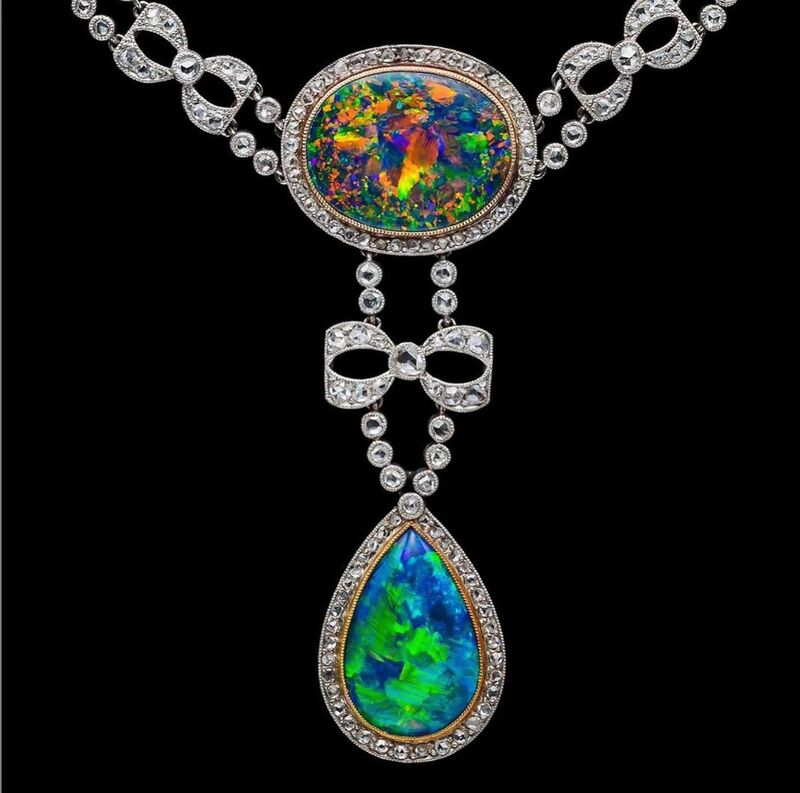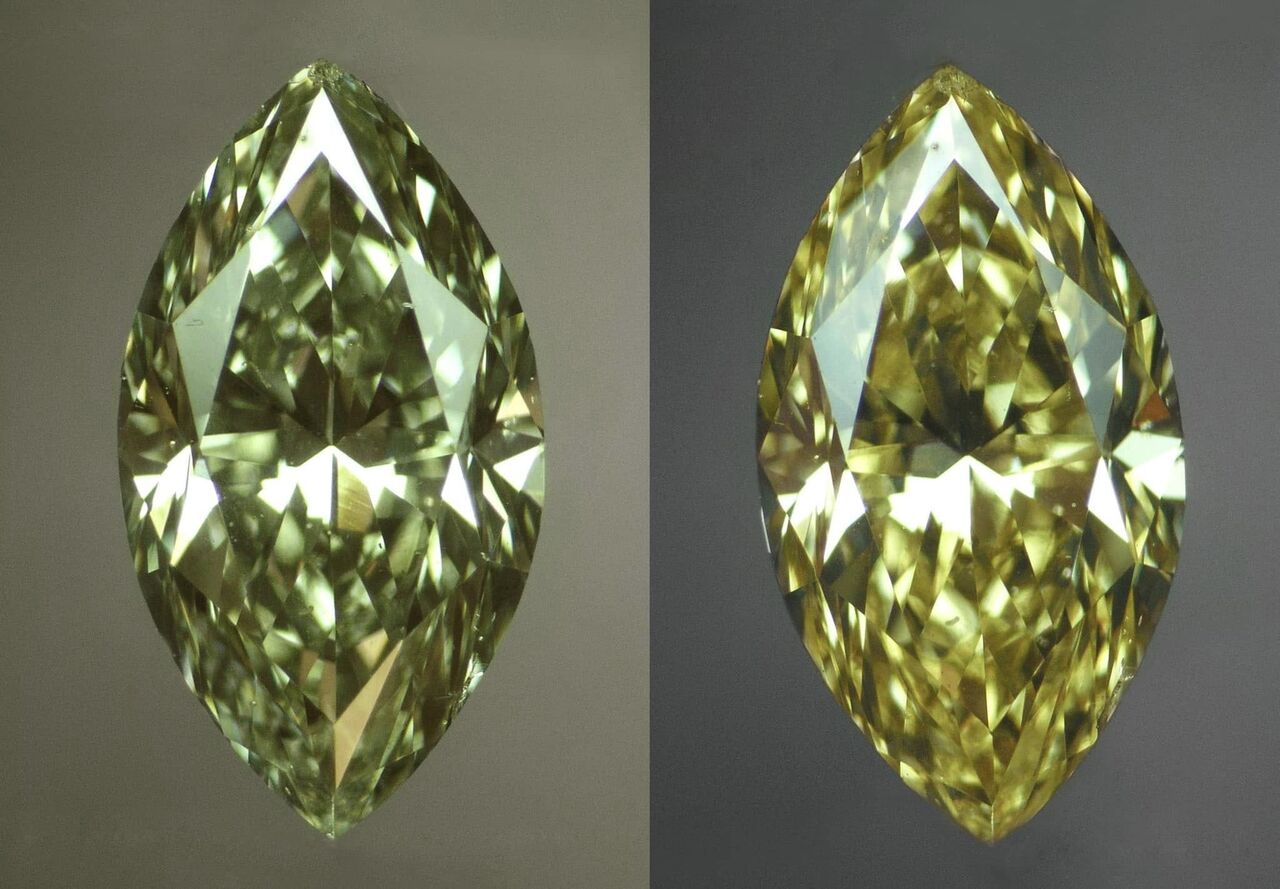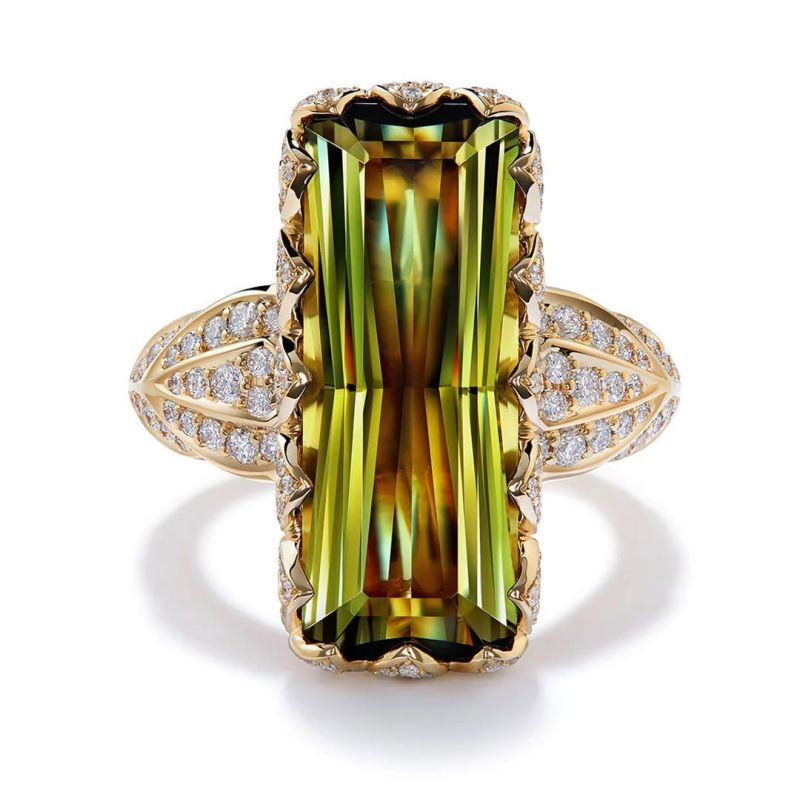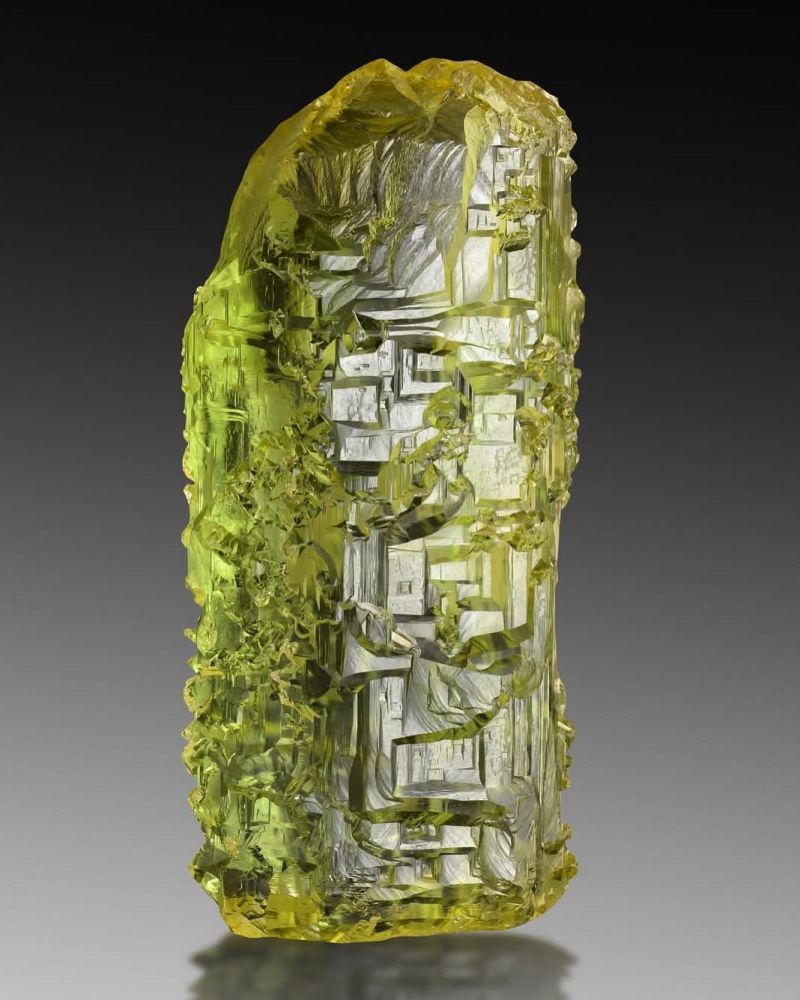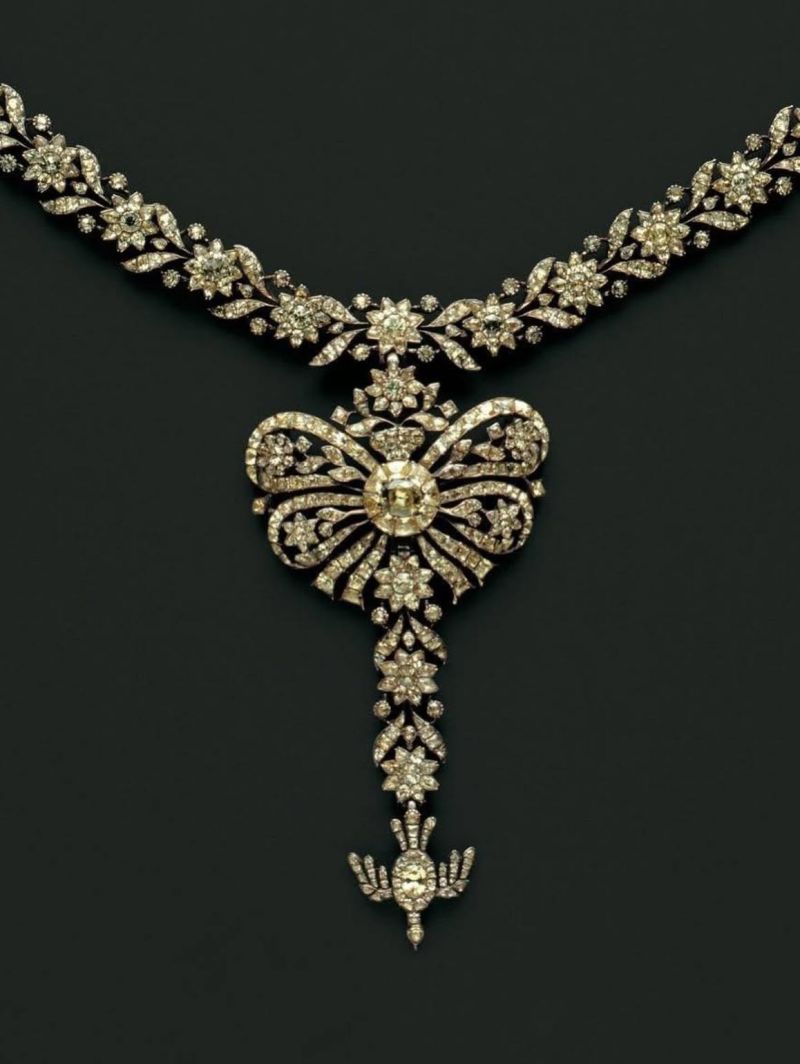

With the MNAA – Museu Nacional de Arte Antiga (National Museum of Antique Art) in Lisbon, Portugal, still closed for renovation for a few more months, let’s share a few pieces of jewellery of the collection, dated from the late 18th century to the early 19th century, in this case those set with one of the most popular Brazilian coloured gemstones of that period: chrysoberyl.
Chrysoberyl, a mineral with a high hardness between topaz and corundum (ruby and sapphire) became very popular in Portuguese and Brazilian jewellery following the discovery of significant quantities of fine gem-quality material in Minas Gerais, Brazil, in the last decades of the 1700s.

Although this mineral is better known for other gem varieties, like alexandrite (the colour-changing variety), the mint-green vanadium-bearing variety and, of course, for its cat’s eye varieties, it was the yellow-green to green-yellow transparent varieties that generated the first impact in jewellery.
In the local trade this gem variety was known in Portuguese as “crisólita” or “crisólito”, a term that is considered a misnomer today also in its English spelling, “chrysolite”, a term that creates interpretation confusion since it meant another gemstone, peridot, hence the historical expression “oriental chrysolite” to differentiate it.

Yellow-green to green-yellow chrysoberyl was typically set with reflective foil back and painted culet in closed settings made of silver in such a way that metal is barely seen when the jewel is viewed from the front.
These examples, from the collection of MNAA, are very good examples of the use of chrysoberyl in jewellery from the late 18th century to the early 19th century.
Photos MNAA © Bảo tàng và Di tích của Bồ Đào Nha
Bài viết của khách Rui Galopim de Carvalho:
https://gem-spectrum.com/category/rui-galopim-de-carvalho

Về tác giả:
Rui Galopim de Carvalho là một Nhà tư vấn Giáo dục Đá quý độc lập nổi tiếng, tác giả, chuyên gia đào tạo ngành công nghiệp xa xỉ và diễn giả quốc tế nổi tiếng về đá quý học và lịch sử vật liệu đá quý. Trong 30 năm kinh nghiệm làm nhà nghiên cứu đá quý, Rui đã nghiên cứu các bộ sưu tập quan trọng tại cả bảo tàng công cộng và tư nhân, đặc biệt là Bộ sưu tập Trang sức Hoàng gia Bồ Đào Nha.
Là người sáng lập chuỗi hội thảo trực tuyến Home Gemmology nổi tiếng được ra mắt trong thời gian phong tỏa vì COVID-19, Rui có bề dày kinh nghiệm trong lĩnh vực truyền thông về đá quý, đặc biệt là trên mạng xã hội, nơi ông là một nhân vật được nhiều người biết đến.
Rui Galopim de Carvalho có thể được tiếp cận thông qua trang web của mình: