“Paraiba tourmaline” was originally only a geographical term for tourmaline from the Brazilian state of Paraiba and later the adjacent state of Rio Grande do Norte. Scientists discovered it had a lot more copper impurities than other natural ,tourmaline, so the term “cuprian tourmaline” was added in the fall 1990 issue of “Gems & Gemology” http://www.gia.edu/…/fall-1990-tourmaline-brazil-fritsch. It is still used by many today including the “GemGuide” for copper-bearing tourmaline outside of Brazil.
Since most tourmaline from Paraiba had brighter colors than other known tourmaline, “Paraiba tourmaline” also became an ambiguous color term for “windex blue” colored tourmaline or for cuprian tourmalines ranging in color from blue to green to yellowish green. However, copper-bearing tourmaline from Paraiba can also be purple or violet.
Many trade members have been opposed to calling African cuprian tourmaline “Paraiba tourmaline”. Simon Watt, a Kentucky dealer who has specialized in Paraiba tourmalines and other rare gems, has been dismayed by what he calls the dumbing down of the meaning of “Paraiba.” He asked “Why should it be okay to call a Mozambique cuprian tourmaline a Paraiba tourmaline when the trade would never consider it acceptable to call an Ethiopian black opal a Lightning Ridge opal?”

“Fei cui” is another term whose meaning has broadened.
Historically and traditionally, it was a revered term that referred to untreated vibrant green jade but trade members are being encouraged to use it now for all pyroxene jade no matter what its color or quality and to replace the term “jadeite jade” with “fei cui” even for stones that contain no omphacite or kosmochlor. Some of the reasons given and rebuttals are:

1. Jadeite jade is a rock (aggregate) composed of jadeite, omphacite and kosmochlor. A rock can’t be named after a mineral.
It has been a common practice to name rocks after their main mineral constituent since the 1800s; e. g., rhodochrosite, rhodonite, sugilite, azurite, charoite, howlite, turquoise, malachite, chrysocolla, cuprite, eudialyte, gaspeite, lepidolite, phosphosiderite, smithsonite, tugtupite, variscite, vesuvianite, etc. . Lapis lazuli was named “blue stone” before people knew its main constituent was lazurite. Unakite, maw-sit-sit, and Sannan-Skarn do not have a primary mineral component. Jadeite jade that is not green to black contains no omphacite or kosmochlor.

2. Some pyroxene jade contains similar amounts of jadeite and omphacite.
This is rare, and gem labs identify it as jadeite/omphacite jade.
3. Destructive testing is required to identify jadeite jade.
Highly respected jade researchers disagree and say that translucent to near transparent jadeite jade can be accurately identified and differentiated from omphacite and kosmochlor with Raman and FTIR spectroscopy, which must be done to confirm pyroxene jade is untreated.
4 All the Chinese are using “fei cui” and they are the main buyers of jade.
All of the Chinese jade retailers and wholesalers I met in Hong Kong at shows and in stores use terms like “jade,” “jadeite,” and Burma jade,” not “fei cui” when selling to English speakers. Chinese Americans think ‘fei cui” is a color and quality term for high-grade untreated green jadeite jade.
5. “Fei cui” is a more scientifically accurate name than “jadeite jade.”
How can a commercial term with multiple conflicting meanings be considered “scientific”?
Fei cui (kosmochlor jade, omphacite jade, jadeite jade, pyroxene jade, imperial jade)
6. Raw fish + rice + seaweed is called “sushi” even in English because culture matters.
If culture and tradition matter, then the trade should use the traditional meaning of fei cui which Chinese Americans are still using —untreated high-quality green jade, However, “fei cui” proponents are even recommending the use of the term “fei cui” for dyed and resin treated pyroxene jade. They think labs should add “fei cui” on lab reports and call it “Fei Cui Type B+C-jade.”
“Jadeite jade” has been acknowledged by mineralogists, geologists, and gemologists worldwide as an appropriate gemological term for an aggregate composed primarily of jadeite. It’s a positive term that helps sell jade. Let’s keep it.
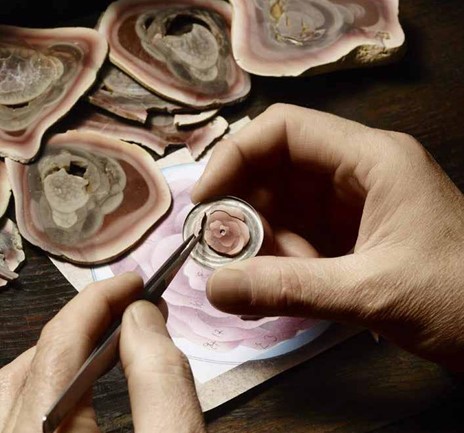
I used this photo by Geoffrey Watt in my tourmaline book “Exotic Gems: Vol 3” www.reneenewman.com/exotic3.htm See www.mayerandwatt.com for more of their photos.
Guest articles by Renée Newman:
https://gem-spectrum.com/category/renee-newman
About the author:
Renée Newman is a gemologist (GG, GIA), lecturer, writer and author of 15 books on gems and jewelry. Her goal is to provide consumers and jewelry professionals with unbiased, affordable information on how to buy, evaluate and appreciate gems and jewelry. She can be reached through her website: