
Consumer trust, on which our business depends, is built upon this lifetime contract. – Dr. Gaetano Cavalieri, President of the CIBJO

Uniting national jewellery and gemstone associations from more than 45 countries around the world, and including many of the industry’s major international corporations and international representative associations, CIBJO, the World Jewellery Confederation is the oldest international organization in jewellery sector, having originally been established in 1926. It covers the entire jewellery, gemstone and precious metals sectors vertically, from mine to marketplace, and horizontally within each of the component sectors in the various production, manufacturing and trading centres.
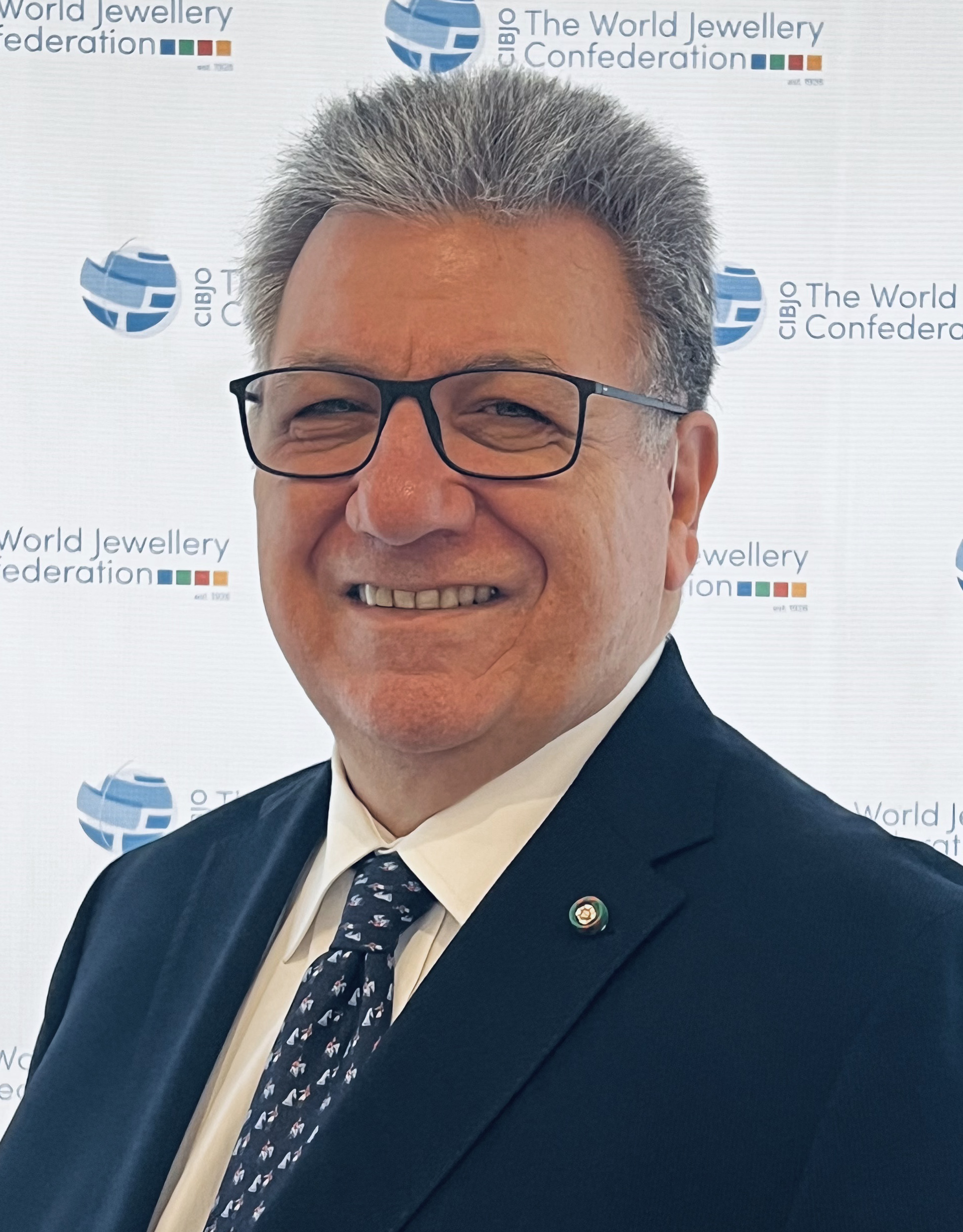
As one of the most prominent leaders in the international jewellery industry today, Dr. Gaetano Cavalieri has served for more than 20 years as president of CIBJO, and was responsible in July 2006 for the organization receiving “Special Consultative Status” with United Nations Economic and Social Council (ECOSOC), making it the first and only jewellery and gemstone representative to be officially recognized by the international body. Together with the United Nations, he established the World Jewellery Confederation Education Foundation (WJCEF), which is responsible for promoting Corporate Social Responsibility education in the international jewellery and gemstone industries.

In this exclusive interview, Dr. Gaetano Cavalieri, President of CIBJO, emphasized that transparency lies at the core of rebuilding consumer trust in the jewellery industry. He stressed the necessity of establishing a clear distinction between lab-grown and natural diamonds, creating an independent pricing system for lab-grown diamonds, and ensuring full disclosure of information during sales. Cavalieri noted that China is emerging as a global trendsetter in the sector. CIBJO is advancing sustainable supply chains and ESG practices through its dynamically updated Blue Book, educational programs, and collaborations with the United Nations. The industry must comply with national regulations worldwide, address geopolitical risks through transparent operations, and maintain long-term product reputation via an “Unwritten Contract” to safeguard consumers’ lifelong trust in jewellery value.
You’ve emphasized the critical role consumer confidence plays in maintaining the perceived value of jewellery. How can the industry collectively rebuild and sustain this confidence in light of recent challenges?
The answer in one single word is “transparency.” We need to be absolutely candid about what exactly the product is, where it was sourced, how and under what conditions its components were mined and manufactured, who we are and how we operate. Consumers need to be able to trust us implicitly. If they do not, then we have lost their confidence, and the essential stability of our business is threatened.

How much a product is worth is up to the consumers, and it does not always have a direct relationship with the actual costs of its component parts. The top luxury brands understand this well. The actual raw materials of a luxury handbag that can sell for tens of thousands of dollars and sometimes even more is bit a small fraction of its overall cost. The savvy consumer understands that but is still prepared to pay that amount rather than buying a knockoff for a few dollars on the street. The consumer is ready to do that because he or she trusts the brand and the message it delivers.
Much of what we do at CIBJO is to provide the tools – through our Blue Book, guidance documents and educational activities – to provide that type of transparency that will ensure consumer confidence.


You mentioned that the marketing strategies during the mass introduction of laboratory-grown diamonds negatively impacted consumer trust. How can the industry create marketing approaches that emphasize transparency and build trust across all product categories?
I have never thought that it was the mass introduction of laboratory-grown diamonds itself that impacted consumer trust, but rather the marketing messages that accompanied their introduction. They failed to differentiate clearly between them and natural diamonds – and in many cases deliberately tried to imply that they were practically the same product – while at the same time saying, without proper verification, that they were produced more ethically and had less of an environmental footprint.
The reason for this marketing strategy was that the laboratory-grown diamond producers’ original business model required them to benchmark their goods against natural diamonds, but at a discount, which was quite low in the beginning but grew larger as time progressed. It was unsustainable situation.
The falling price of laboratory-grown diamonds was always predictable, as it is for all mass-produced products over time. But the consumer was never told that and then woke up one day to discover that the value of the synthetic product they bought was now worth only a fraction of what they paid. That understandably led to crisis in confidence.
CIBJO’s work with laboratory-grown diamonds has been almost entirely devoted to developing protocols that completely differentiate between them and natural diamonds, while at the same time emphasizing that they are manufactured products. This does not mean that they are doomed to failure from a business perspective, but rather that they should be marketed and sold in way that remain a profitable and viable business category over the long term.
The rapid growth of the lab-grown diamond sector has created tension within the industry. What steps can be taken to coexist successfully while ensuring both markets thrive without undercutting each other?
They should live together like any other two industry categories, like diamonds and coloured gemstones, and pearls, etcetera.
As long as there is prior disclosure, meaning that the consumer knows exactly what he or she is buying at the point of sale, and accurate information is provided about each type of element, even if they are set in the same item of jewellery, coexistence is not only possible but often advantageous.
For example, a jewellery manufacturer can stick to a price point by using both laboratory-grown diamonds and natural diamonds in the same jewellery. There is nothing inherently wrong with that, as long as the consumer is told which is which, and he or she understands the consequences.
You’ve pointed out the issues stemming from benchmarking lab-grown diamonds against natural diamonds. What alternative pricing or value systems would you propose to distinguish these products while preserving consumer confidence?
First, it is necessary to eliminate the strategy of using the same price list, even if laboratory-grown diamonds are being substantially discounted.
They are two different categories. There are a finite number of natural diamonds flowing into the market. The miners cannot exceed the number of the number of goods they have in the ground. With natural diamonds, higher demand for goods of limited supply will inevitably lead to higher prices.
Laboratory-grown diamonds do not have a production ceiling, meaning that they can produced on order in whatever quality category and colour that is selected. They should work on a fixed price structure, but that too can be adjusted upward if the marketing of these goods creates the type of demand that justifies it.
With China becoming a global trendsetter in the jewellery industry, what opportunities does its rising influence present for international collaboration and market growth?
I think China almost certainly will be a major trendsetter in its own right.
At the 2024 CIBJO Congress in Shanghai last November we ran a special session that featured representatives of design schools around the country. What was clear to all of us China is fast developing its own sense of self, which is focused internally, but externally as well. There for a long time has been a clear perception in the global marketplace of what constitutes an Italian design, or a Japanese or German design. China is finding its way into that conversation.
What we are doing in CIBJO with Fei Cui or jade and jadeite is interesting. For a long while, these products had little traction in the West, while they have long been massively popular in China and other parts of Asia. We now have a Fei Cui Working Group helping draft international standards. It is both a response to growing awareness of product category in the West, and also a means by which growth in demand can be encouraged.

Sustainability has become a pressing concern for consumers. How is CIBJO working to create and enforce sustainable practices across the global jewellery industry, and what challenges does the organization face in this effort?
CIBJO cannot enforce any practice on its own, although we do work together with bodies that have the legal authorities and means to do so. For example, in 2021 the European Union began implementing a new set of conflict minerals regulations, known as Regulation (EU) 2017/821. We worked together with the EU in drafting those regulations, which today have to be complied with by companies operating within the European Union and by companies that supply them.
Our role in the formulation of sustainable practices is multifaceted. We set standards through our Blue Books, with include a Responsible Sourcing Blue Book, and sets of guidelines, which today include two devoted to ESG (Environmental, Social and Governance) practices. We also offer a Responsible Souring Toolkit at no cost via our website, and we regularly run a wide range of educational activities included courses by the CIBJO Academy and series of seminars and webinars.
In addition to that, we speak on behalf the industry as its single representative in the United Nations Economic and Social Council (ECOSOC), and have also been involved in other international bodies, including the UN Global Compact and OECD. In these bodies, we have worked hard to dispel the image of the industry as a sector that mainly serves the interests of affluent consumers, but rather is one that has delivered real and sustainable economic, social and environmental benefits to the countries and communities in which it is active.

With geopolitical tensions and economic uncertainties affecting global trade, what strategies should the jewellery industry adopt to remain resilient and adaptable?
CIBJO’s position has always been clear. It is incumbent always upon the industry to comply fully with the law of lands in which they work and operate. In other words, if the law requires one to comply with a sanctions regime, it is what you need to do.
Our situation is a complicated by the fact that sometimes, while there may be no sanctions in the country where one lives, such restrictions exist in places where we supply your goods. There, we need to be cognizant of the laws under which other members of our chain supply operate, and if it is required that we segregate the goods that we deal in, in order to allow then our foreign counterparts to operate within the confines of the law, then that is what we need to do.
Above all, it goes it goes back to what I said before, and that is to act with complete transparency. Ultimately that always has to be our primary strategy.
The CIBJO Academy and the Blue Books are integral to maintaining industry standards. How do you envision their role evolving to keep pace with emerging trends and challenges?
CIBJO’s Blue Books, which currently includes standards, operating principles and nomenclature relating to diamonds, coloured gemstones, pearls, coral, precious metals, gemmological laboratories and responsible sourcing are living documents. What this means is that, on an ongoing basis, they are being reviewed and updated.
There are a number of drivers of the review process, but new technologies are most probably the most important. In any given year, we may become aware of technologies developed that enable new treatments, which may or may not have a permanent or reversable effect on the stone. This often necessitate changes or amendments to the relevant Blue Books.
The role of the CIBJO Academy is to impart the vast wealth of knowledge and detail contained in the Blue Books, mainly to the industry but also to the consuming public. Because the Ble Books are living documents, so must be the course structure of the CIBJO Academy.
Consumer preferences have shifted dramatically in recent years. How do you see global consumer tastes evolving, and how can the jewellery industry anticipate and adapt to these changes?
Millennial consumers, which have dominated jewellery sales for the past several years, have clearly been more conscious of product integrity, and particularly as they related to the social impacts and the environment. The urgency with which we and other industry bodies have worked to develop the terms of reference of responsible supply chains, and tools and principles for enabling transparent and, to whatever degree possible, traceable supply chains, are testament to that.
But we should be careful not to generalize. Consumer preferences differ from market to market. Less mature markets, and particular in countries with a fast-growing middle class, are more inclined to see evidence of more ostentatious consumption, as people go out of the way to show their new-found success. This certainly was the case within China in the 2000s and India in the 2010s, and we could expect the same for some of the larger African markets, like Nigeria, in the late 2020s and 2030s. What that means is that we have to build strategies that are very tailored to meet the needs of the markets we are targeting.
Also, the pendulum swings. So, whereas research how Millennium consumers to be very aware of a product’s social and environment integrity, Gen Z consumers are possibly less inclined to. This does not meet that we should shelve our efforts to build transparent and traceable supply chains, for that would seem to me to be an irreversible process. But we will have to conduct market research to understand what our consumers want from us.
You’ve referred to an “unwritten contract” between the jewellery industry and consumers. Could you elaborate on what this entails, and how can the industry ensure that it continuously upholds this implicit agreement?
There may be a host of unwritten contracts between the jewellery industry and its customers, but the one I would prefer to emphasize is that which we commit to ensuring all that we can to protect the reputation of the product we sell, so that its value will not be compromised years after it was sold.
What does this mean? Let us say I sold a diamond ring in 1990, getting fair market value for the piece of jewellery at the time. This was 10 years before the world knew about conflict diamonds, but when that crisis broke my obligation was to do something about it, which would not only protect future sales but also the rights of the specific young man in 1990 who had bought the ring from me for his fiancée.
Consumer trust, on which our business depends, is built upon this lifetime contract.
Articles about CIBJO:
https://gem-spectrum.com/tag/cibjo
Special Note:
This exclusive interview by Julius Zheng was commissioned and published by China Diamond Year Book (2024), which was printed in English and Chinese in April 2025.
Special thanks to Shanghai Diamond Exchange, the publisher of China Diamond Year Book, for the approval of publishing this interview on Gem Spectrum. Shanghai Diamond Exchange is a WFDB member bourse and the only portal in China to enjoy the favorable tax policy of importing polished diamonds.
The PDF of Diamond Year Book from 2020 to 2024 can be downloaded here:
https://www.cnsde.com/#/yearBook

This article was published and printed on Gem Spectrum print magazine Issue #3 Spring 2025, page 1. Please browse the Flipbook below. Full-screen viewing and downloading possible.