by Jacqueline Jimmink, Master Engraver
In a world where speed and automation have become the standard, the quiet mastery of the human hand is at risk of disappearing…To learn hand engraving is to slow down, to observe, and to understand material at its deepest level. It is to develop a skill that cannot be replaced by machines, because it is rooted in human sensitivity and experience. For those who are willing to invest the time, it offers not only a profession, but a lifelong journey of refinement. – Jacqueline Jimmink

In a world where speed and automation have become the standard, the quiet mastery of the human hand is at risk of disappearing. Yet it is precisely these rare crafts — such as hand engraving — that embody the true essence of craftsmanship and cultural heritage. Every line cut into metal by hand is an irreversible decision, a direct expression of experience, control, and artistic insight. Within that single cut lies something no machine can ever replicate: human intention.
Since 1988, I have dedicated my life to the craft of hand engraving, developing my work across decades of professional practice and international exchange. What began as a fascination with line and form evolved into a lifelong pursuit of mastery. Today, from my atelier on the island of Texel in The Netherlands, I continue to practice, teach, and advocate for this extraordinary craft.

Hand Engraving as a Living Heritage
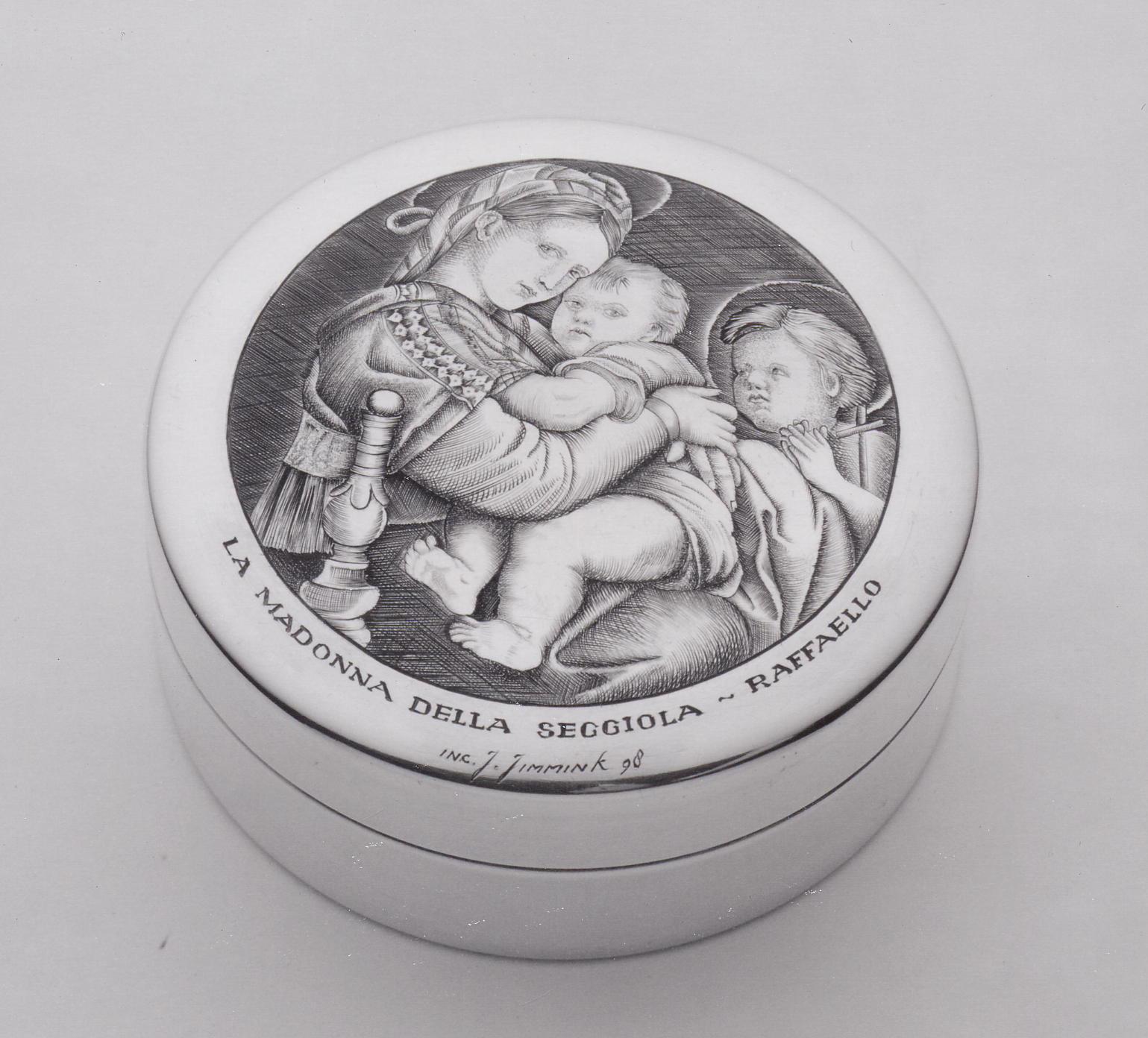
Hand engraving is one of the oldest decorative and functional techniques in metalwork. For centuries, it has been used to enrich jewelry, watches, firearms, silverware, and ceremonial objects. Each engraved line carries intention—cut directly by hand, guided by experience and control.
Unlike machine engraving, hand engraving is not repeatable in the same way. It reflects the individuality of the engraver. The pressure, rhythm, and decision-making of the hand are visible in every cut. This makes each piece unique and irreplaceable.
However, this heritage is fragile. Across Europe and beyond, the number of skilled hand engravers is declining. Without structured education and dedicated training, this knowledge risks being lost.
The Importance of Learning the Craft
Learning hand engraving is not simply acquiring a skill—it is entering a mindset. It teaches patience in a world of speed, discipline in a culture of shortcuts, and observation in an age of distraction.

At the KHN® Knowledge Center for Hand Engraving, which I founded, the focus is on preserving and transferring this knowledge to a new generation. Students range from complete beginners to professional goldsmiths and engravers seeking to refine their technique.
The learning process is structured yet deeply personal. It begins with fundamental control—how to hold the tool, how to create a consistent line—and gradually evolves into artistic expression. There is no shortcut to mastery, but there is a clear path for those willing to commit.
Craftsmanship and the Future
In the luxury and high-end jewelry sector, there is a growing appreciation for authenticity and craftsmanship. Clients increasingly seek pieces with a story—objects that carry the mark of the human hand.
Hand engraving adds not only decorative value, but emotional and cultural depth. It transforms an object into a narrative.
For the industry, this presents both an opportunity and a responsibility. Investing in education, supporting craftsmen, and valuing manual skills are essential steps to ensure that hand engraving remains relevant and alive.
Creating Spaces for Exchange
To support this mission, I initiated The Engrave In International II – Texel Edition 2026, an intimate, high-level gathering of professional engravers and beginners from across Europe.

This is not a trade show or competition. It is a curated environment where knowledge is shared openly—through demonstrations, lectures, and collaborative work. Events like these are crucial. They strengthen networks, elevate standards, and inspire both established masters and emerging talents.
A Personal Commitment
After more than three decades in this field, I remain convinced that hand engraving is not a relic of the past, but a vital part of the future of craftsmanship.
To learn hand engraving is to slow down, to observe, and to understand material at its deepest level. It is to develop a skill that cannot be replaced by machines, because it is rooted in human sensitivity and experience.
For those who are willing to invest the time, it offers not only a profession, but a lifelong journey of refinement.
Articles about Jacqueline Jimmink:
https://gem-spectrum.com/tag/jacqueline-jimmink
Gem Spectrum takes pride in supporting heritage and traditional techniques!
About the Author:

Jacqueline Jimmink is a Master Engraver and the Founder of KHN® Knowledge Center for Hand Engraving, The Netherlands.
📩 info@jacquelinejimmink.com | +31 6 838 217 83
📍 https://www.jacquelinejimmink.com/hand-engraving-academy/the-engrave-in/
📷 Instagram: @khn_jacquelinejimmink