by AIGS

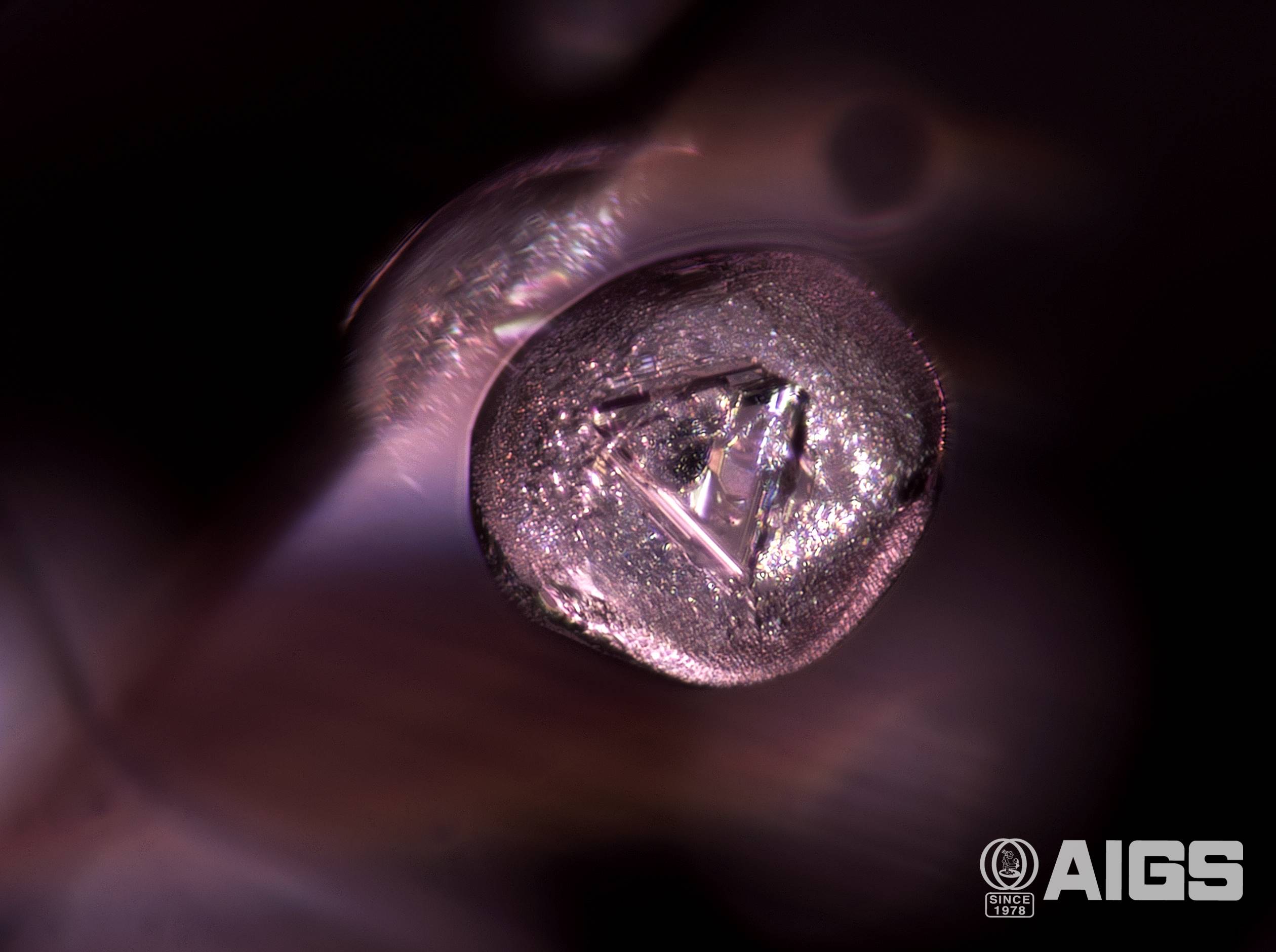
This captivating image reveals a distinctive apatite inclusion exhibiting the classic “belly button” appearance within a natural, unheated spinel from Mogok, Myanmar one of the world’s most renowned sources of fine spinel.

The term “belly button” is used by gemologists to describe a rounded apatite crystal featuring a central depression or inclusion, often giving it a navel-like visual effect. In this example, the apatite host encloses a dark mineral inclusion, likely ilmenite or graphite, positioned centrally within the crystal. The sharp internal reflections and well-defined geometry of the apatite further enhance its visibility under magnification.
Such composite inclusions form during crystal growth when apatite crystallizes first or simultaneously with spinel, subsequently trapping minute opaque minerals within its structure. The resulting inclusion presents a layered history of mineral formation, preserved in remarkable clarity.
Gemological Significance:
“Belly button” apatite inclusions are considered highly diagnostic of natural spinel, particularly from Mogok. Their presence strongly supports an unheated origin, as these delicate internal features are typically preserved only in untreated stones. Moreover, the association with opaque minerals such as ilmenite or graphite provides additional insight into the geological environment of formation.

Inclusions like this are more than visual curiosities, they are microscopic signatures of origin, capturing the complex interplay of minerals deep within the Earth.
Articles related to AIGS:

https://gem-spectrum.com/?s=AIGS
Articles on AIGS Inclusion of the Month:
https://gem-spectrum.com/tag/aigs-inclusion-of-the-month
Articles on gemology:
https://gem-spectrum.com/tag/gemology