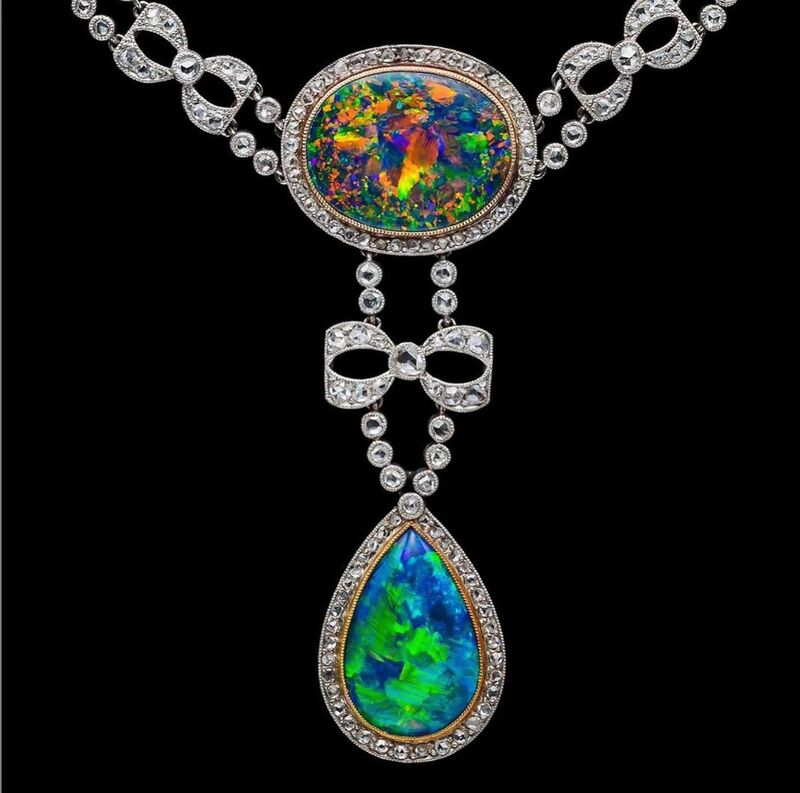
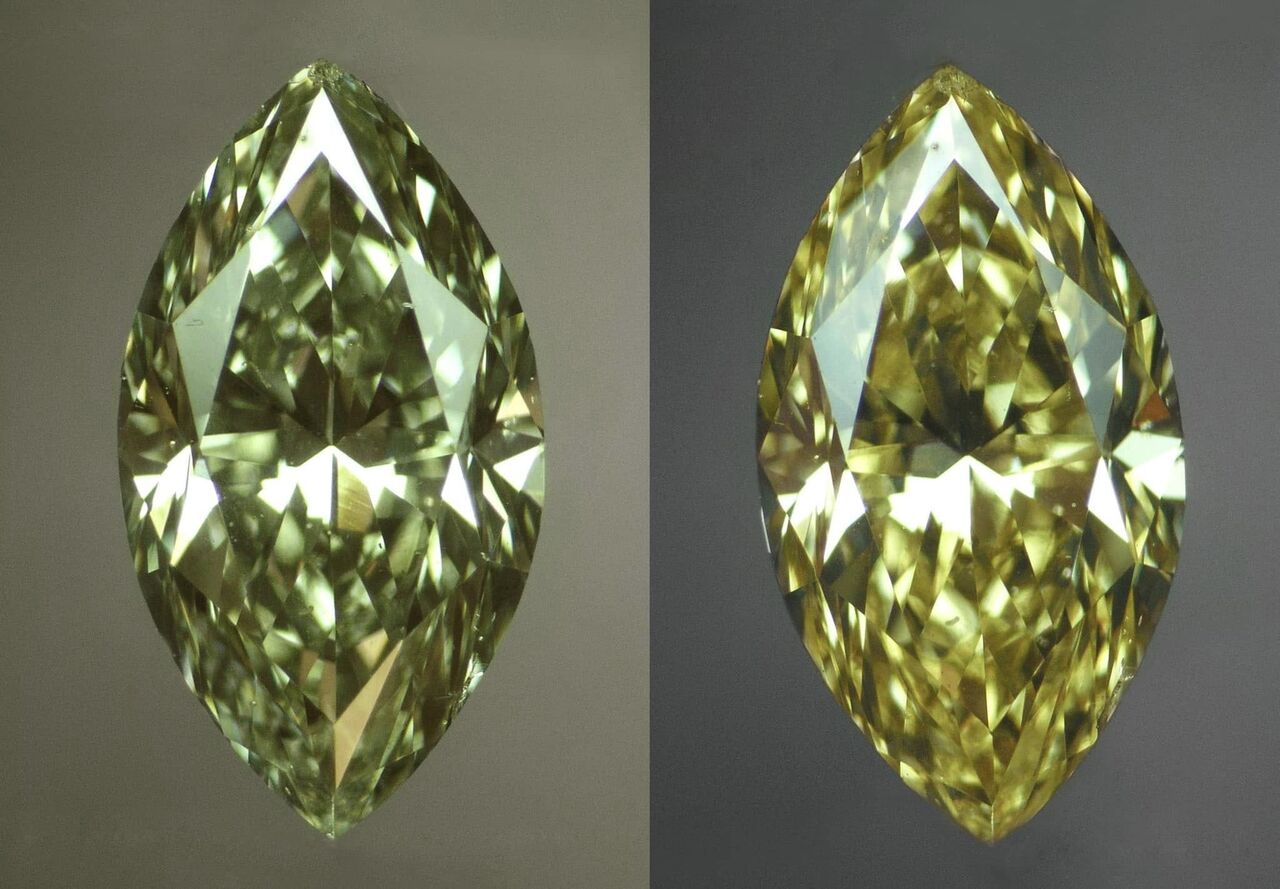
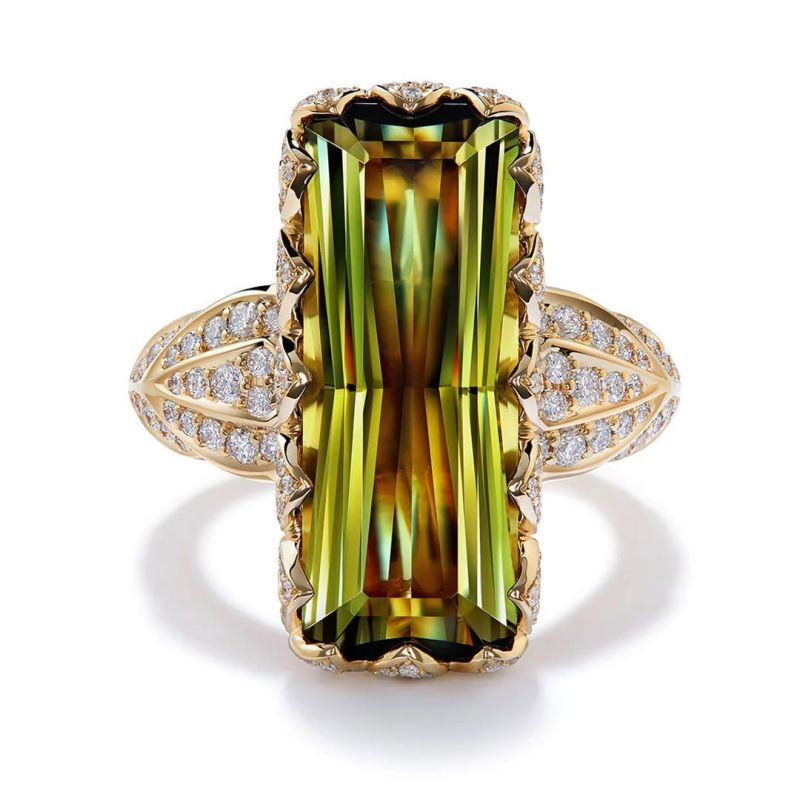
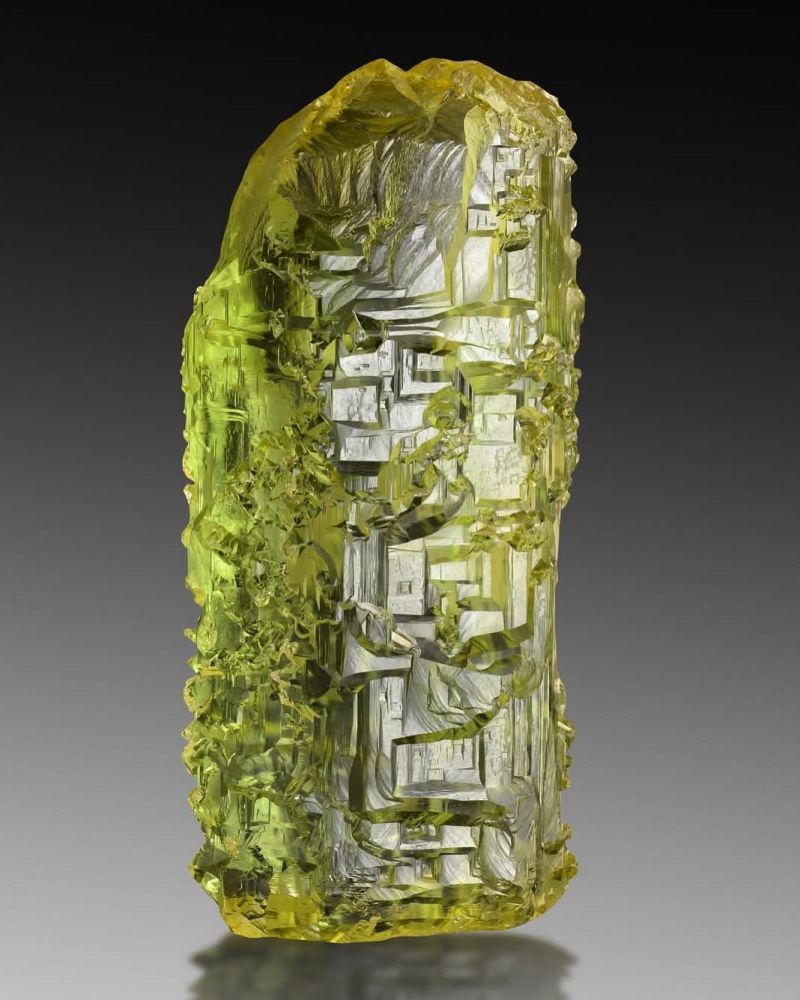
Jewellery lovers visiting Portugal often hear the term “crisólita” to describe what actually looks like chrysoberyl in 1700-1800s jewellery. As an actual fact, in the Portuguese antique’s market, “crisólita” or “crisólito” is a very popular trade name although it is originally a late-18th century misnomer corresponding to greenish-yellow chrysoberyl, a mineral that was named after its transparency and colour, from the Greek , “chrysos”, “gold”, and berullos, “transparency”. In Portugal and Brasil, it has also been referred to as “oriental chrysolite” (crisólito/a oriental).
This gemstone became very popular in Portuguese and Brazilian jewellery on the last quarter of the 1700s, especially in the early 1800s following the discovery of significant quantities of fine gem quality material in Minas Gerais, Brazil, particularly in the Minas Novas district.

Chrysoberyl is, however, better known for its colour-changing chromium-bearing variety, alexandrite, the mint-green vanadium-bearing variety and, of course, for its cat’s eye varieties, sometimes referred to in the trade as cymophane.

In the photos, a large (16.80 cm x 8.80 cm) silver and enamel pectoral set with foiled topazes, foiled chrysoberyls and two diamonds, with floral motifs characteristic of the period, possibly designed to be used on a dress with similar phyto-morphic motifs. All the gemstones presumably of Brasilian origin. Photo by Carlos Pombo Monteiro © Fundação Eugénio de Almeida / Arquidiocese de Évora
Guest articles by Rui Galopim de Carvalho:
https://gem-spectrum.com/category/rui-galopim-de-carvalho

About the author:
Rui Galopim de Carvalho is a renowned independent Gem Education Consultant, author, luxury industry training expert and popular international lecturer on gemmology and on the history of gem materials. During his 30 year experience as a gemmologist, Rui has studied important collections in both public and private museums, notably the Portuguese Crown Jewels.
Founder of the popular Home Gemmology webinar series launched during the COVID-19 lockdown, Rui has a long history as a gemmology communicator, notably on social media where he is a popular figure.
Rui Galopim de Carvalho can be reached through his website: