by Julius Zheng
With the 2026 CIBJO (World Jewellery Confederation) Congress set to open in Vicenza, Italy, on September 4, the federation has released a series of 10 pre-congress Special Reports. These documents, prepared by the confederation’s various commissions, provide an in-depth look at the most pressing issues and strategic directions for the global jewellery trade, covering sustainability, terminology, precious metals markets, education, and the emerging challenges posed by generative artificial intelligence.
Sustainability: A Framework for Resilience and Value Creation

CLICK HERE TO VIEW SPECIAL REPORT

The first report, issued by the Sustainable Development Commission led by John Mulligan, frames sustainability as a core pillar of industry resilience rather than a mere compliance burden. It notes that as government regulations shift from principles-based frameworks to requiring evidence-based claims, traceable supply chains, and structured climate reporting, the industry faces growing regulatory complexity and cost pressures.
However, the report argues that when approached strategically, sustainability can act as a driver of value, innovation, and long-term growth. To support the industry, CIBJO has made a suite of tools available for free on its website. These include the Responsible Sourcing Blue Book and Toolkit, the ESG & Sustainability Reference Guide, the ESG Wheel, Measurement Guidance, and a forthcoming Double Materiality Assessment Guide. These resources are designed to help companies of all sizes understand their responsibilities and take effective action.


“By focusing on consistency in how sustainability is defined and communicated, by embedding stability in how it is implemented over time, and by supporting alignment across different actors and initiatives, the industry can strengthen its foundations,” Mulligan writes, concluding that sustainability can become a means of building trusted and adaptive value chains.
Education and Market Development: Launch of the International Fine Jewellery Academy

CLICK HERE TO VIEW SPECIAL REPORT
The second report, from the Marketing and Education Commission chaired by Jonathan Kendall, details one of CIBJO’s most significant recent educational initiatives — the establishment of the International Fine Jewellery Academy (IFJA) .
Created through collaboration between CIBJO, Fondazione Mani Intelligenti of Valenza, Confcommercio Milano, and CAPAC, IFJA is a hands-on jewellery academy in Milan designed to educate the next generation of professionals. Its programs will include theoretical instruction in English and practical training in specialized laboratories, alongside internships with master artisans at partner companies in northern Italy.
A key feature of the academy is its connection with the productive sector. “Through partnerships with companies, workshops, designers, manufacturers, and industry organisations, IFJA will provide students with meaningful opportunities for experiential learning,” Kendall writes.
Precious Metals: Navigating a “Landmark Year”

CLICK HERE TO VIEW SPECIAL REPORT
The third report, from the Precious Metals Commission chaired by Vaishali Banerjee, describes 2025 as a “landmark year” for precious metals, with record highs for gold, silver, and platinum, and strong gains for palladium.
While higher prices weighed on the volume of jewellery sold, the value of purchases increased, reflecting sustained consumer demand. The market saw a trend of cross-metal substitution, with the high-end market shifting somewhat from gold to platinum, and gold-plated silver jewellery gaining popularity in markets like India and China.
Gold jewellery consumption declined by volume across all major markets. In Europe, it contracted by 11% to 6.6 million ounces, and the United States saw its lowest-ever gold jewellery consumption, down 13% year-on-year to 3.7 million ounces. Looking ahead, the report expects continued market volatility but notes that precious metals will likely remain well-supported as stores of value. It also emphasizes that growing supply chain scrutiny will make provenance, traceability, and ESG credentials increasingly important for competitiveness and consumer trust.
Diamond Terminology: The 4Cs Reserved for Natural Diamonds

CLICK HERE TO VIEW SPECIAL REPORT
The fourth report, from the Diamond Commission chaired by Udi Sheintal, proposes a significant shift in how diamonds are described. The report argues that the 4C grading system (Cut, Color, Clarity, Carat) should be used exclusively for natural diamonds and not for laboratory-grown stones.
“This is because it is a tool intended to define the rarity and uniqueness of natural stones, where each one is different from the other. We need to end the use of the 4Cs for grading synthetic diamonds, given that they are industrially produced,” Sheintal writes. He argues that using the 4Cs for synthetic stones misleads consumers into believing they share the rarity of natural diamonds, which is not the case since production parameters are controlled by the manufacturer.
The report raises the fundamental question: “Do the words we use today continue to fulfil the purpose for which international nomenclature was originally created?” This discussion is part of a broader effort to refine terminology around laboratory-grown diamonds, with the proposal to favor the term “synthetic.”
Colored Gemstones: Standardizing the Language of Description

CLICK HERE TO VIEW SPECIAL REPORT
The fifth report, issued by the Coloured Stone Commission led by Charles Abouchar, focuses on the importance of using clear and descriptive language to protect consumer confidence. A major change is the decision to eliminate the terms “laboratory grown” and “laboratory created” as acceptable descriptions for synthetic gemstones within CIBJO’s Blue Books. Starting in September 2026, only the term “synthetic” will be permitted for these products to ensure the market is clear and consumers are properly informed.
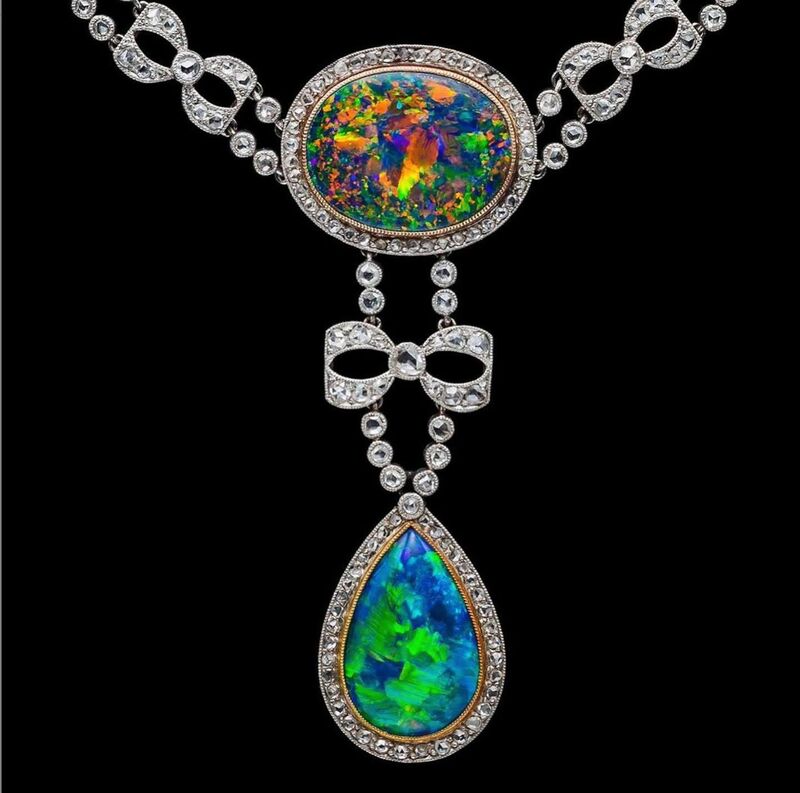
The report also introduces new guides for opal and jade (Fei Cui), the results of years of work by expert committees. An ad-hoc working group has also begun preparing a Valuations Guide that will consider the different conditions and customs in various parts of the world.
Abouchar also discussed the proliferation of “fancy” color descriptors like “pigeon’s blood” for rubies, noting that these are not international standards and can lead to unjustified premium prices. He recommends discouraging such terms or clearly indicating on reports that they are the opinion of the laboratory.
Generative AI: Legal Risks and Ethical Governance

CLICK HERE TO VIEW SPECIAL REPORT
The sixth report, prepared by the CIBJO Ethics Commission chaired by Sara Yood, examines the ethical and legal impacts of Generative Artificial Intelligence (GenAI) on the jewellery industry.
The report draws a fundamental distinction between AI-assisted work and AI-generated work. “There is a fundamental difference between AI-assisted work, in which a human remains the creative decision-maker, and AI-generated work, in which the system determines much of the expressive result,” Yood writes.
This distinction carries significant legal implications. According to the report, GenAI itself cannot be an author for copyright purposes, meaning a design made solely by GenAI cannot qualify for copyright protection and is effectively free for anyone to use. This creates a central tension for the industry, as GenAI can “appropriate, imitate or obscure creativity” while also potentially expanding human creative capacity.
Yood points out a critical challenge: current intellectual property law is struggling to keep pace with fast-developing AI technology. “One of the issues with AI is that, currently, it is essentially unregulated, meaning that there is little oversight as to how companies are building algorithms, where they are sourcing information, and how and even if they are preventing their algorithms from being trained on copyrighted material,” she notes.
In the absence of clear regulatory guidelines, the report recommends that individual companies create their own governance frameworks. Yood calls for written policies that include:
– At least one person overseeing AI use within the organization
– Prohibiting unauthorized copying and deliberate imitation of others’ work
– Disclosing GenAI use when it affects authorship, authenticity, or consumer expectations
– Not allowing AI to misrepresent design, materials, craftsmanship, or provenance
– Recognizing AI’s environmental impact
“Having a governance framework for acceptable AI use will also prepare the business for continued evaluation of new GenAI systems as they come to market,” she writes.
The report emphasizes that GenAI’s legitimacy within the jewellery sector will depend on whether it enhances rather than diminishes “human creativity, cultural relevance, and the trust from which jewellery derives its value.” This echoes themes from CIBJO’s 2025 Technology Committee report, which cautioned that over-automation risks undermining the narratives of artisanship and human connection that luxury jewellery depends upon.
Gemstone Laboratories: Ensuring Report Integrity

CLICK HERE TO VIEW SPECIAL REPORT
The seventh report, from the Gemmological Commission chaired by Hanco Zwaan, emphasizes the urgent need to harmonize best management practices, technical requirements, and testing protocols to ensure public confidence in gemmological reports.
“Traders and gemmological laboratories should work together to provide correct gemstone information at all levels. We recommend that laboratories carefully implement the best practices set out in the CIBJO Gemmological Laboratories Blue Book,” Zwaan writes.
The report notes that the Gem and Jewelry Institute of Thailand (GIT) recently announced it would incorporate the mineral, gemstone variety, and trade name standards listed in the CIBJO Gemmological Laboratories Blue Book into its revised national gemstone vocabulary standard. Zwaan also announced that he would be stepping down as chair of the Gemmological Commission.
Cultured Pearls: A Century of Parallel Development

CLICK HERE TO VIEW SPECIAL REPORT
The eighth and final report, prepared by the CIBJO Pearl Commission chaired by Kenneth Scarratt, considers the unparalleled development of the pearl market over the past 100 years, driven by the growth of cultured pearl production. The report is particularly significant as CIBJO marks its own centenary year in 2026.
The report notes a landmark French court ruling in 1924, two years before CIBJO was established in its original form, when it was adjudicated that the term “cultured pearl” was appropriate for a product whose creation had involved human intervention. Scarratt writes that this was among the first issues considered by the jewellery industry’s standard-setting body during its early years.
“Since then, as stated clearly in the CIBJO Pearl Blue Book, the term ‘cultured’ has had to be used in all sales to ensure that buyers understand that the formation process was initiated by human intervention,” he notes.
The extensive special report includes contributions by several noted pearl industry experts, as well as by leading pearl research institutes, considering both the pearl itself and the influence of pearl farming on the marine environment. Providing updates on the CIBJO Pearl Blue Book and the CIBJO Pearl Guide, the report also:
– Gives an overview of the Australian South Sea cultured pearl market
– Discusses the importance of maintaining genetic diversity in Akoya oysters
– Looks at how pearling may contribute to the global societal goal of halting and reversing nature loss by 2030, becoming “nature positive”
The report also presents three short contributions—one from DANAT, Bahrain Institute for Pearls and Gemstones, and two from the Gemological Institute of America (GIA)—highlighting the scientific work being undertaken to improve understanding of both natural and cultured pearls.
Precious Coral: Sustaining Heritage Through Knowledge Transfer

CLICK HERE TO VIEW SPECIAL REPORT
The ninth report, prepared by the CIBJO Coral Commission chaired by Vincenzo Liverino, provides a case study on how to sustain and grow the historic coral industry. The report stresses that sustainability extends beyond environmental stewardship to include the preservation of human knowledge and skill gathered over centuries .
Liverino writes: “While much of the industry’s recent focus has justifiably centered on responsible environmental stewardship, sustainable harvesting practices, and the differentiation between deep-water precious corals and threatened reef corals, we must also champion the deep cultural footprint and irreplaceable heritage associated with this biogenic gem material” . He emphasizes that coral manufacturing requires highly specialized skills that take decades to master, and traditionally, those possessing them can be found in very specific areas in Italy and parts of Asia .
“The sustainability of the industry requires that artisanal skills are not lost,” Liverino stresses. “That demands deliberate action” . The report notes that attracting young artisans to the coral sector is particularly challenging, as the number of people able to impart the necessary knowledge and training is limited .
To address this, the report highlights the CIBJO Academy as a promising development that will educate trade stakeholders on CIBJO standards, industry best practices, and the relevance of corals. This educational body will give significant exposure to the work of the Coral Commission, including the recently reviewed CIBJO Coral Guide for Customs and updated versions of the Coral Blue Book .
The report builds on previous Coral Commission work that established the scientific distinction between deep-water precious corals (Corallium, Pleurocorallium, and Hemicorallium) and shallow-water reef corals threatened by global warming . Studies have demonstrated that the coral fishing and processing sector can positively impact ESG dimensions, representing “a clear example of integrated sustainability, in which the protection of the marine environment is accompanied by economic development and the preservation of cultural traditions” . Advances in DNA analysis have also enabled identification of previously unknown precious coral species, supporting conservation efforts and regulatory compliance .
The Studies of promises and pitfalls
of profound technological changes impacting industry

CLICK HERE TO VIEW SPECIAL REPORT
The tenth and final pre-congress Special Report has been released. Prepared by the CIBJO Technology Committee, headed by Stéphane Fischler, the report provides an overview of the technologies likely to fundamentally change the way jewellery is produced and sold, but it also considers what needs to be done to preserve the element of human individuality in the jewellery craft.
“AI, blockchain, the Internet of Things (IoT) and advanced data analytics are reshaping every node of the supply chain, from mine to market,” Mr. Fischler writes. “These innovations promise greater efficiency, traceability and personalisation, but they also introduce new risks around data governance, cultural identity, workforce displacement and the preservation of artisanal craft.”
Certain of the risks posed by the new technology are not immediately obvious, and among these are the dangers to privacy posed by systems which collect information from the people and companies that use them.
“Augmented-reality try-on tools also capture biometric data, such as facial geometry and hand proportions, which requires particular care,” Mr. Fischler points out. “Supply-chain data sharing compounds the risk.”
“The concentration of sensitive data creates significant risk. Jewellers hold high-net-worth customer profiles — names, addresses, purchase values and biographical milestone data — that are attractive targets for cybercriminals. A breach does not expose only individual customers; it can permanently damage the trust on which fine jewellery brands depend,” he notes.
Artificial intelligence is almost certainly the most powerful and disruptive of the new technological tools, and an over-reliance on its generative capability could inject elements of uniformity, particularly where it comes to jewellery design.
“AI design tools are structurally inclined to produce the most statistically central result: designs reflecting the average of what has already been made,” Mr. Fischler writes. “In practice, this means the over-representation of Western European jewellery traditions and the systematic under-generation of Mughal, West African, East Asian and indigenous aesthetic vocabularies.”
“The risk is a homogenisation of global jewellery design — a narrowing, rather than an expansion, of creative possibility,” he adds.
“A jewellery brand’s story, like the cultural significance of a stone, is not a fixed catalogue of facts but a living narrative, shaped in the telling and tailored to each new audience,” Mr. Fischler says. “AI can preserve the archive; it cannot perform the story.”
“The most durable competitive advantage will belong to those firms that understand this difference and invest accordingly — in the people, practices and curatorial intelligence that transform stored knowledge into expressed identity,” he writes.
Looking Ahead: The Vicenza Congress
The 10 pre-congress reports collectively outline a clear roadmap for the jewellery industry towards greater standardization, sustainability, and consumer protection. The 2026 CIBJO Congress in Vicenza on September 4 will serve as a key platform for these critical discussions to continue.
This year marks 100 years since the establishment of CIBJO in 1926. As CIBJO is the only jewellery industry organization with Special Consultative Status with the UN Economic and Social Council (ECOSOC), its Blue Books and guidelines continue to provide a critical reference framework for international jewellery trade. The federation’s chief mission — to protect consumer confidence in the industry — remains at the heart of all eight reports, guiding the global trade toward a more transparent, responsible, and innovative future.

The World Jewellery Confederation (CIBJO) is the international jewellery confederation of national trade organisations. CIBJO’s purpose is to encourage harmonisation, promote international cooperation in the jewellery industry and to consider issues which concern the trade worldwide. CIBJO’s chief mission is to protect consumer confidence in the industry. The World Jewellery Confederation is the sole jewellery industry organisation to have Special Consultative Status with the United Nation’s Economic & Social Council (ECOSOC) and is a member of the UN Global Compact.
Articles about CIBJO:
https://gem-spectrum.com/tag/cibjo