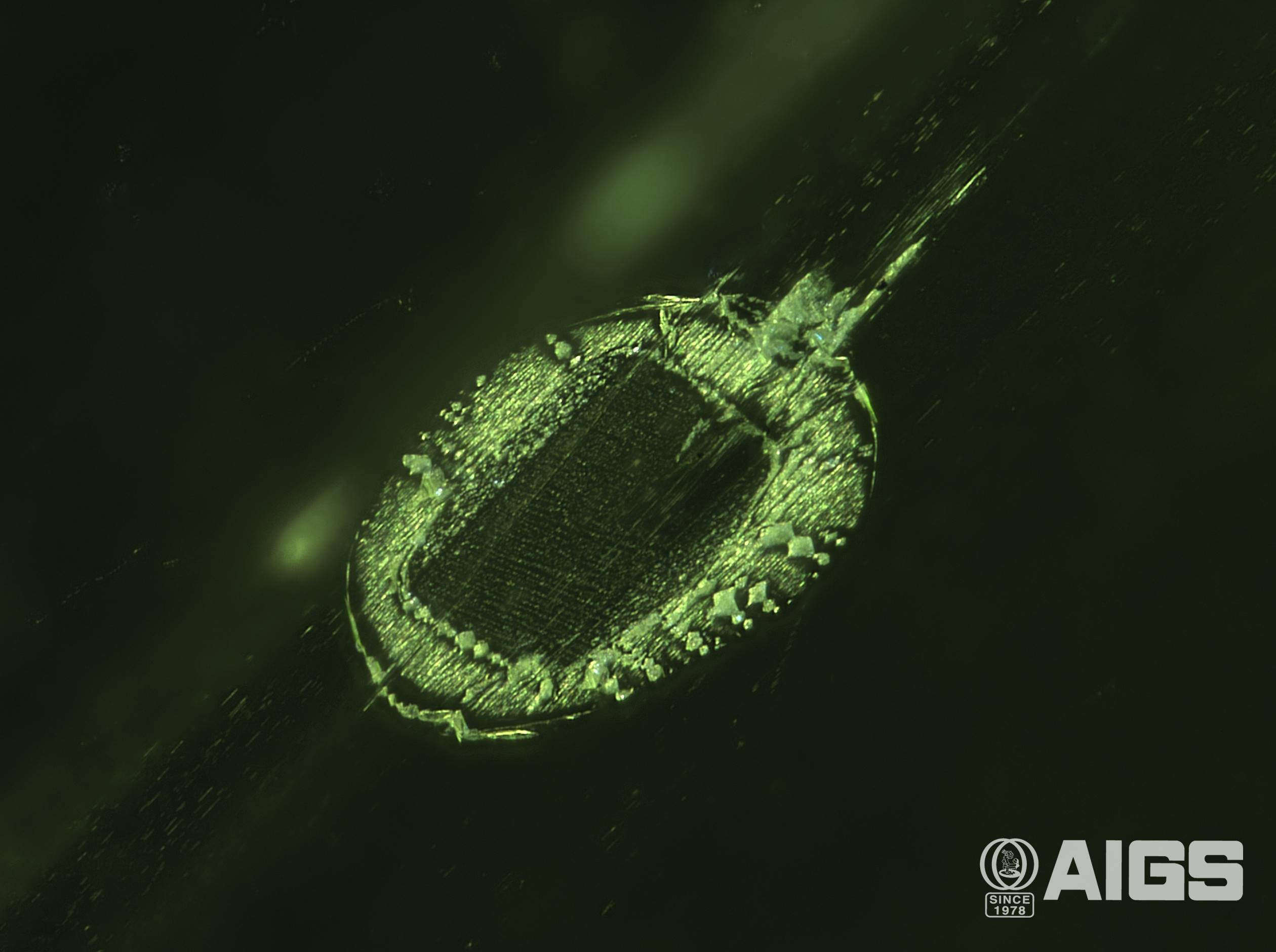
by AIGS

Hidden within this peridot from Mogok, Myanmar lies a tiny crystal of biotite, surrounded by a delicate strain (dislocation) halo. Captured during the gemstone’s natural growth, this inclusion offers a rare glimpse into the geological environment in which the crystal formed deep within the Earth.
Biotite is a common rock-forming mica mineral that may become enclosed as peridot crystallizes. Differences in the physical properties of the host crystal and the included mineral create localized internal strain, producing the halo-like feature visible around the inclusion. Such microscopic scenes are not only visually striking but also provide valuable information about the gemstone’s growth history.
Why It Matters
Mineral inclusions are among the most informative features found within natural gemstones. They confirm that the gemstone formed naturally and preserve evidence of the geological conditions present during crystallization. When interpreted alongside other gemological observations, inclusions such as biotite may also contribute to geographic origin determination. Every inclusion tells part of the story of the Earth’s dynamic geological processes.
Articles related to AIGS:

https://gem-spectrum.com/?s=AIGS
Articles on AIGS Inclusion of the Month:


https://gem-spectrum.com/tag/aigs-inclusion-of-the-month
Articles on gemology:
https://gem-spectrum.com/tag/gemology