Guest Article by Vincent Pardieu

In February 2015, at the Hong Kong Gem Fair, my industry friend Hayley Henning (known for her years at the Tanzanite Foundation) shared some exciting news: she had just accepted a role working with rubies from Greenland for True North Gems (TNG). TNG had been exploring for rubies in Greenland since the early 2000s and had secured a mining license in 2013. Hayley asked if I could give her a crash course on rubies. With the show’s vast array of rubies from around the world at hand, it was the perfect place to prepare her for this new challenge. I agreed—on one condition, delivered half-jokingly (or was it?): she had to promise to invite me to visit the ruby mine in Greenland one day.

Visiting Greenland had been a childhood dream, and I had no idea that just two years later that promise would be fulfilled. By early 2017, after leaving my role as Senior Manager for Field Gemology at GIA to start consulting, Hayley, working now with Greenland Ruby, the company that took over the project after TNG’s bankruptcy, asked me to join as a consultant. Backed by Norwegian mining company Leonhard Nilsen & Sønner (LNS), Greenland Ruby wanted advice on the ruby market and help introducing these gems to the global trade.


In May 2017, we travelled to Copenhagen and then on to Greenland with my colleague Philippe Ressigeac, another rough ruby expert. After examining the stock and visiting the Aappaluttoq mine, I was struck by what I found: the most modern ruby mine I had ever seen, in the most remote location I could imagine. That paradox was as fascinating as the gems themselves.
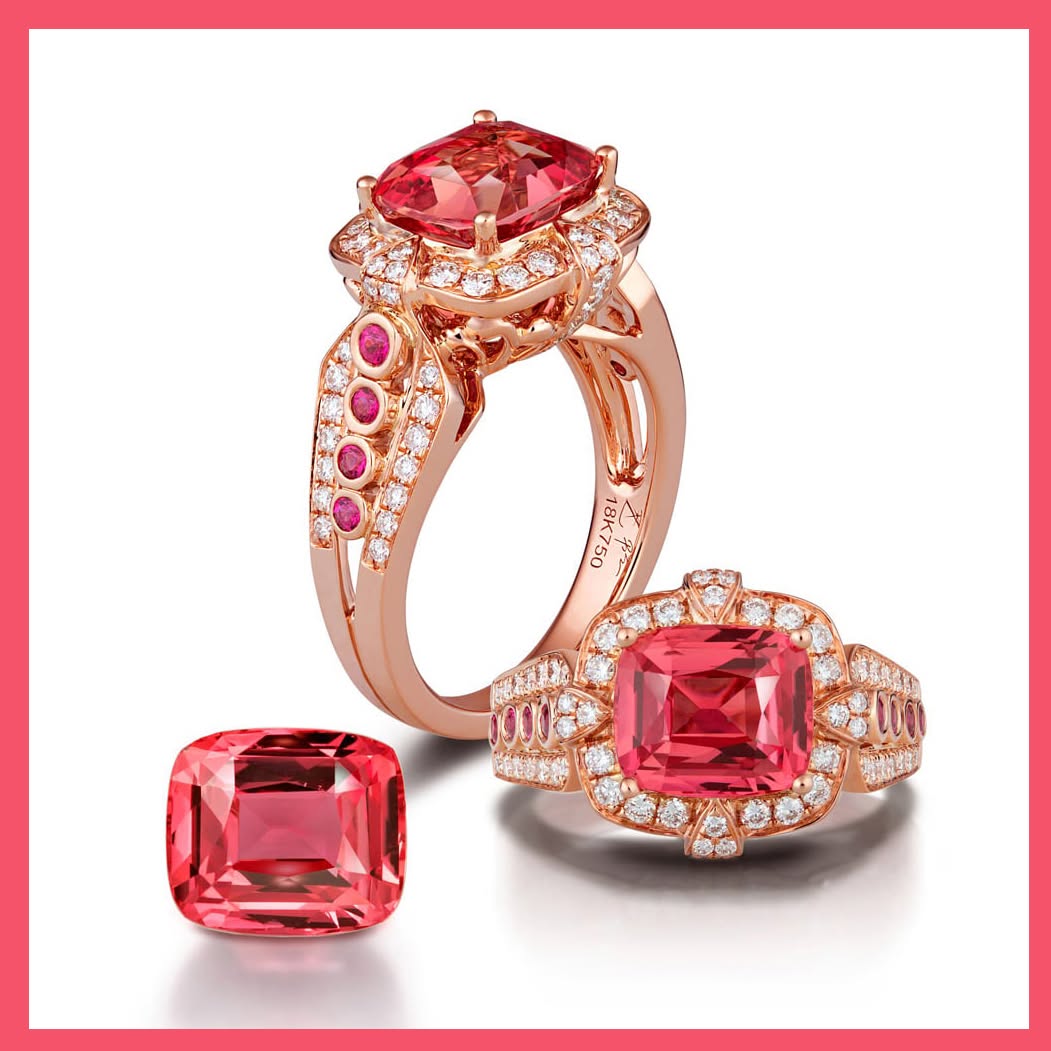
From 2018 onward, I returned regularly to Greenland (eleven visits in total) working closely with teams at the mine and in Thailand, documenting the entire journey: from geology and mining to sorting, cutting, heating, and finally, jewelry creation. Danish jeweler Ulrik Hartmann was among the first to use Aappaluttoq rubies, crafting pieces now worn by clients including Her Majesty Queen Margrethe II of Denmark.

But the project faced challenges. The pandemic hit hard, and despite significant exploration in 2021 and 2022, the supply of fine-quality material was never enough to sustain the business. A month after my last visit in November 2022, I learned the mine was closing. By September 2024, Greenland Ruby had declared bankruptcy.


We began experiments in Thailand with borax flux heating, led by Karim Guerchouche of Premacut Ltd., to heal fractures in unheated stones and improve color and transparency. The results were promising. Greenland Ruby then established an office in Bangkok, transforming rough stones into faceted gems, cabochons, and beads, supported by a custom-built traceability software to track each gem from mine to market.

Reflecting with Swiss geologist Léonard Cornuz, we realized how privileged we were to have witnessed ruby mining in one of the world’s most remote places for five incredible years. This book grew out of that privilege — a visual and narrative record of those expeditions and the remarkable people involved.
Why Field Gemology Matters?
Gemology is the study of gemstones. For most gemologists, this means working in a lab or office with specialized instruments, determining a gem’s identity, treatments, or origin. My path was different. Since 2004, I have practiced Field Gemology—a term I coined in 2005 to describe conducting gemological work on-site, at the source, in the mines, markets, and outcrops where stones are first discovered and traded. In the field, the key questions are not just “What is it?” but “What can be done with it? Does it have value? For whom?” My goal when collecting research samples is to bring back material with reliable provenance, documented through what I call the “Four Ws”: When, Where, From Whom, and HoW it was collected. This traceability is essential for scientific research and, increasingly, for the trade. Field gemology is also about context—capturing landscapes, mining operations, and the people whose skills and labor bring gems to life. As Sir David Attenborough once said, “Unless you know where it came from exactly, and when it came exactly, you are missing a lot of very, very important information.”
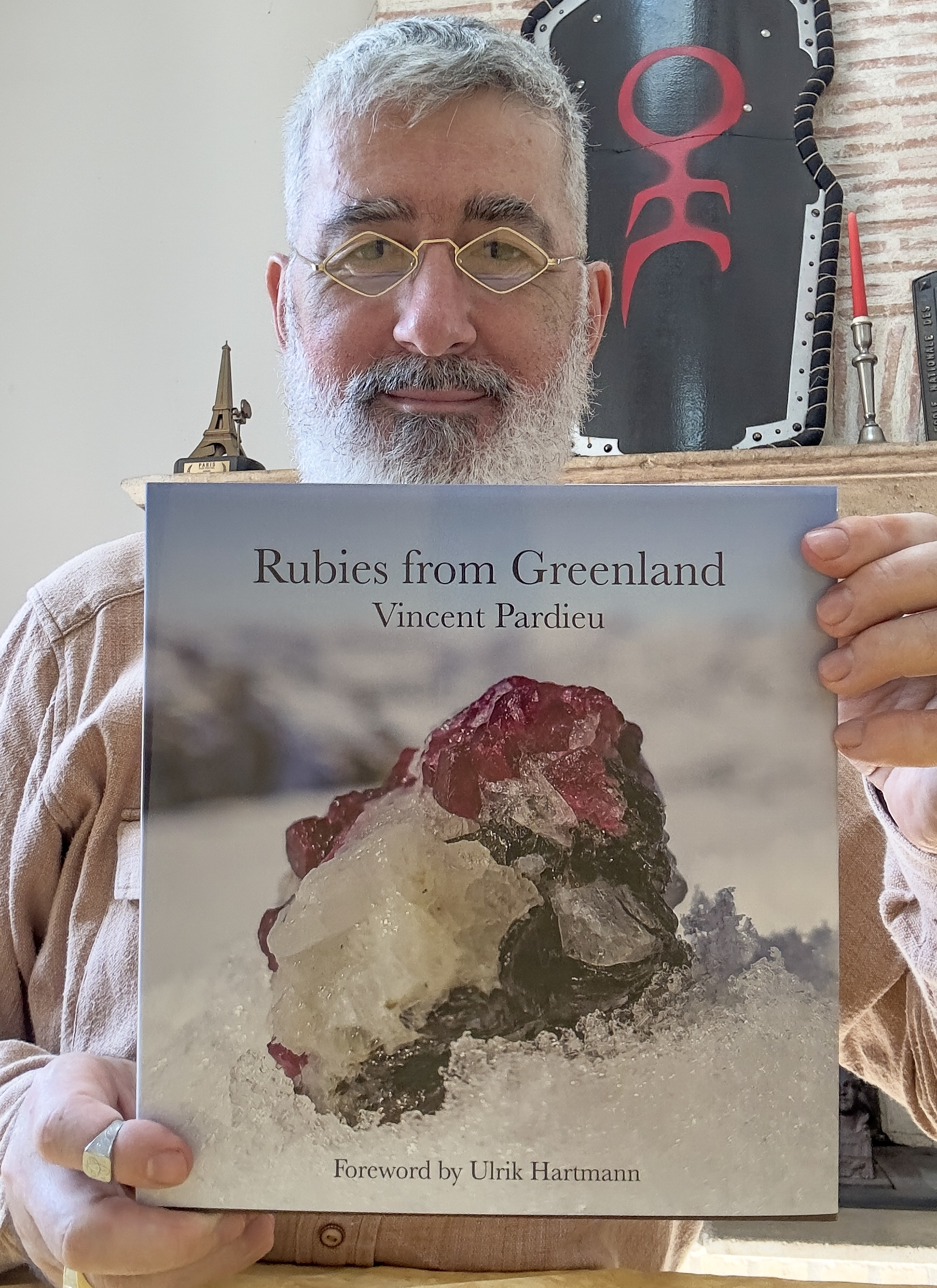
Rubies from Greenland – My New Book

During a diner with my former boss Henry Ho, the founder of AIGS, in 2024, I found that Henry was very enthusiastic about a book project about exotic gem deposits. There was then a lot of interest on Greenland as President Trump was proposing to buy it from Denmark. So we decided to go for “Rubies from Greenland” as the first volume of my Field Gemology Travelogues.
With that book our aim is to document the Aappaluttoq ruby mine’s short but remarkable history, from its opening in 2017 to its closure in 2022. The journey follows these ancient rubies—the oldest known on Earth—from Greenland’s icy landscapes to the heating and cutting centers of Bangkok and Chanthaburi, and finally to the hands of jewelers and their clients. The book is largely visual, with photographs that some might at first seem repetitive (miners in orange suits, similar-looking stones, or inclusions, etc.) but each image tells part of the story. Subtle variations matter; they are the essence of fieldwork.
Alongside my own observations, I have included contributions from key players: Peter Madsen, who built the mine; Karim Guerchouche, who refined the heating process; Hayley Henning, who promoted the gems globally; Ulrik Hartmann, who set them into exquisite jewelry; and Dr. Supharart Sangsawong, who studied their inclusions at the ICA Gem Lab in Bangkok. I don’t know many books revealing all the supply chain for such an exotic gem. In that sense it is a very rare and unique document.
Finally, I was very pleased to collaborate on this first project with Henry and Kennedy Ho and the team at AIGS as it brings back great memories of my early days in the gem industry.


Whether you are a student, a gemologist, a jeweler, somebody interested on the supply chain of exotic gemstones from mine to market, a collector, or simply someone fascinated by Greenland and its treasures, I hope this book offers both insight and inspiration.
Enjoy the journey.
About the author:
Vincent Pardieu is world famous field gemologist with passion for gems, people and conservation. He is also a divemaster, photographer and an author.
His Instagram page has over than 190,000 fans globally.
https://www.instagram.com/vincent_pardieu
The guest article was made available before Vincent Pardieu’s presentation on “Rubies from New Amphibole Related Deposits” and his book signing during the AIGS Alumni Connect 2025 event in Bangkok, Thailand on September 7.

This article was published and printed on Gem Spectrum print magazine Issue #4 Summer 2025, page 34. Please browse the Flipbook below (full screen viewing possible).