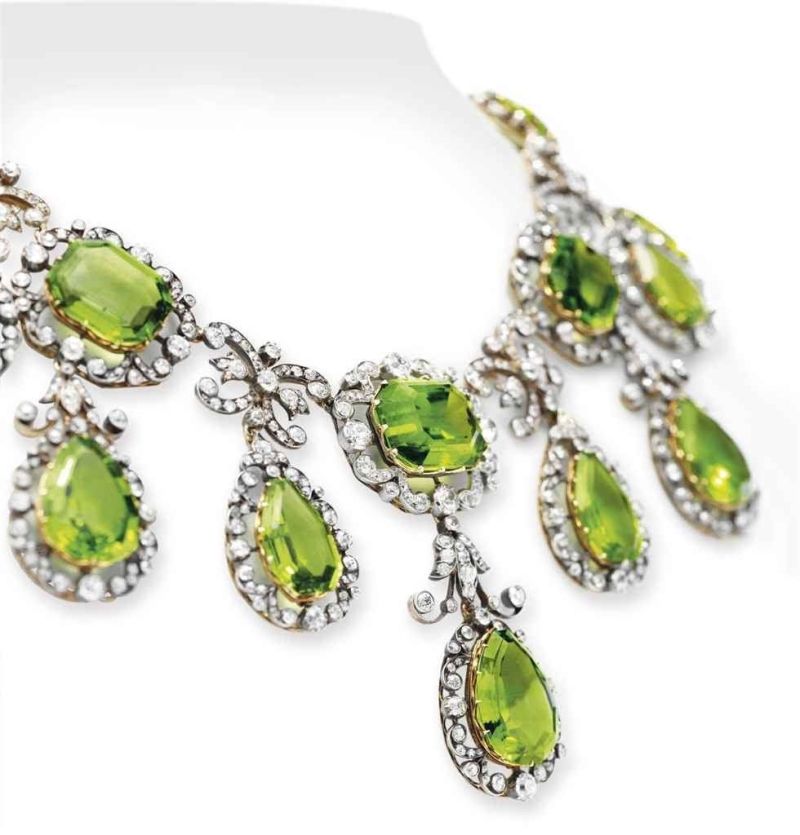

The concept of birthstone is quite popular in many geographies, and in August, peridot is one of them, along with spinel and agate with white and brown bands (often known as sardonyx).
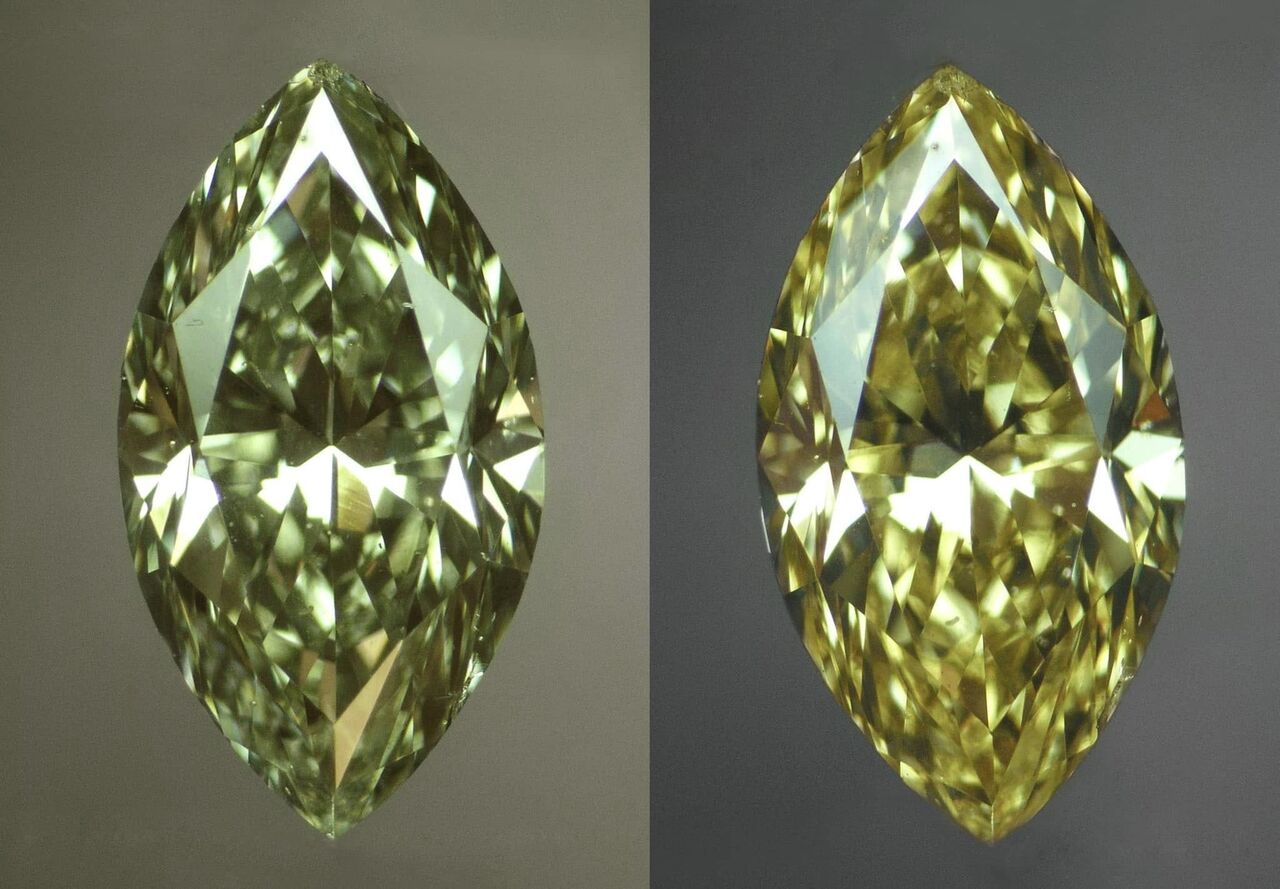
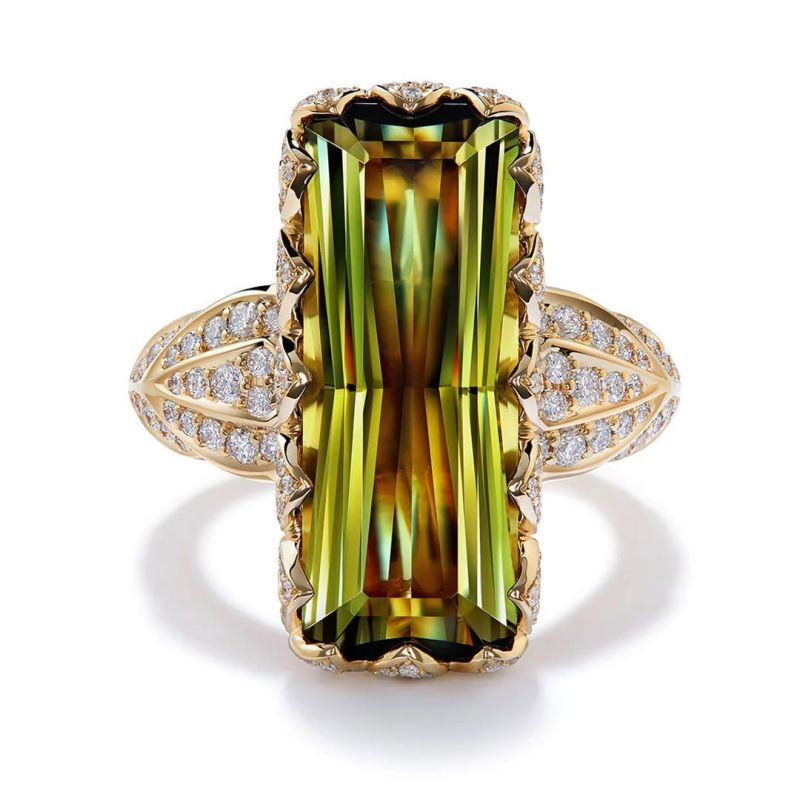
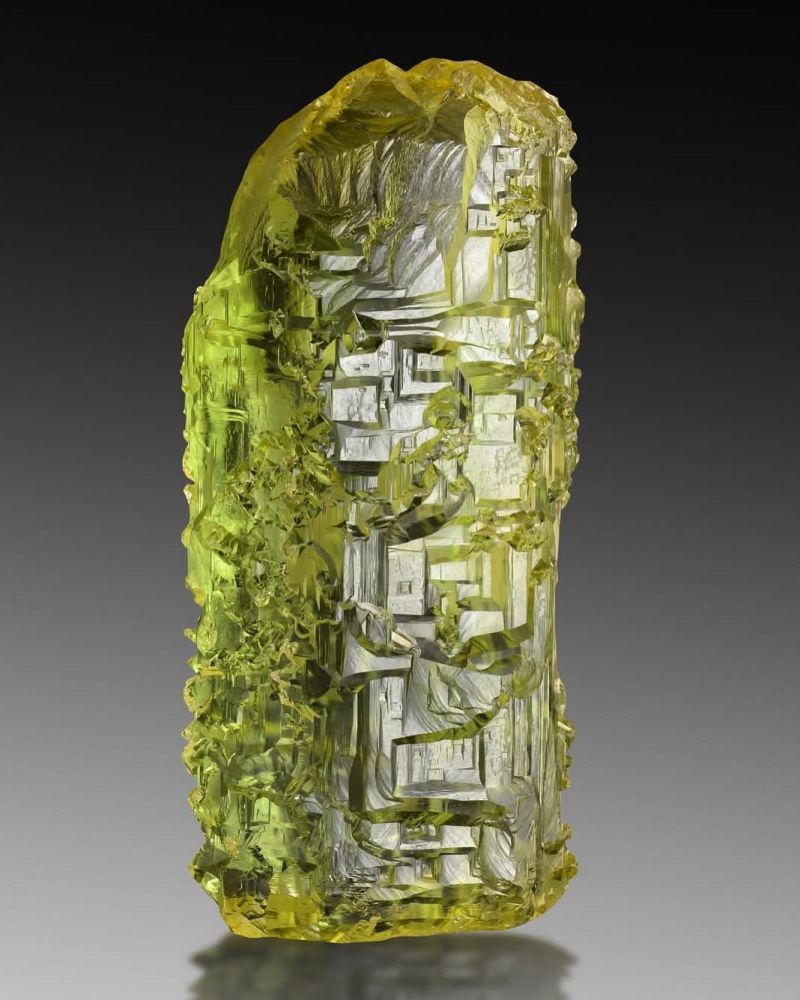
Let’s focus on the first, peridot. It corresponds to the trade name of the yellowish-green to vivid green gem variety of olivine.

© The Metropolitan Museum of Art
A term that technically represents a forsterite-rich solid solution of the forsterite-fayalite isomorphic series, where forsterite (Mg-rich) and fayalite (Fe-rich) are the mineral end-members.
In simpler words, olivine is a magnesium-rich silicate with some iron content that, when of gem quality, is currently known in the trade as peridot.

On an historical note, it has been used since Antiquity with fine material reported form the Egyptian island of Zabargad or Topazios (St. John’s) at least since the 3rd century BCE.
Larges stones may look fuzzy due to the doubling caused by the relatively high birefringence (0.036). Diagnostic lily pad inclusions (flat disk-like healing planes) may be observed under magnification.
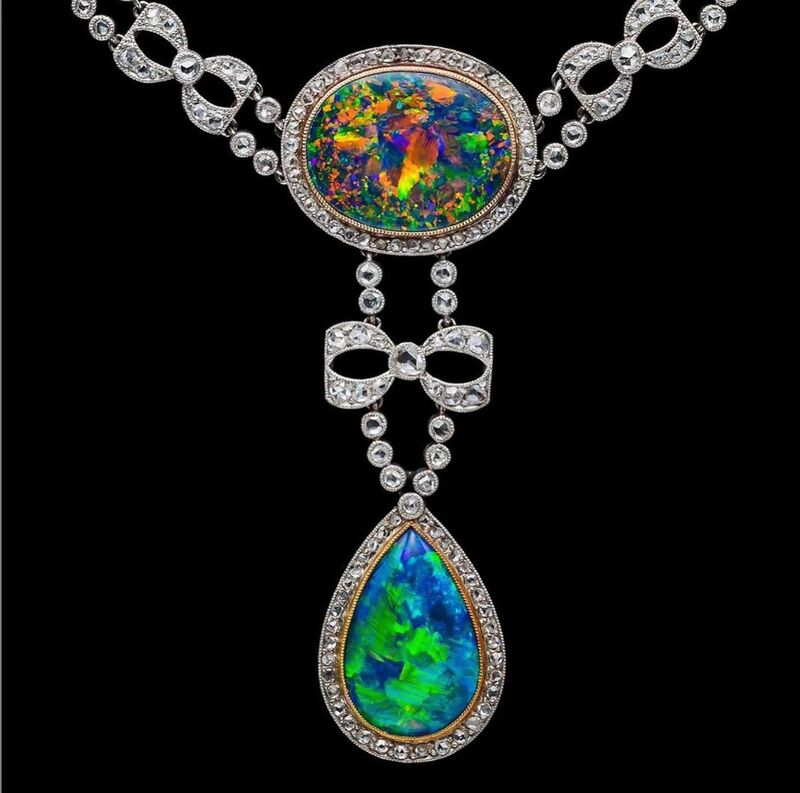
In the photos: diamond and peridot necklace, ca. 1870 © Christie’s ; Peridot carving representing the head of sleeping Medusa, ca. 1st century BCE–3rd century CE © The Metropolitan Museum of Art ; St Edward’s Crown of the British Crown Jewels that were set in 1911 for the Coronation of George V that features peridot along with pink and green tourmaline, topaz, rubies, amethyst, sapphire, almandine garnet, zircon, spinel and aquamarine. Royal Collection Trust / © His Majesty King Charles III
Guest articles by Rui Galopim de Carvalho:
https://gem-spectrum.com/category/rui-galopim-de-carvalho

About the author:
Rui Galopim de Carvalho is a renowned independent Gem Education Consultant, author, luxury industry training expert and popular international lecturer on gemmology and on the history of gem materials. During his 30 year experience as a gemmologist, Rui has studied important collections in both public and private museums, notably the Portuguese Crown Jewels.
Founder of the popular Home Gemmology webinar series launched during the COVID-19 lockdown, Rui has a long history as a gemmology communicator, notably on social media where he is a popular figure.
Rui Galopim de Carvalho can be reached through his website: