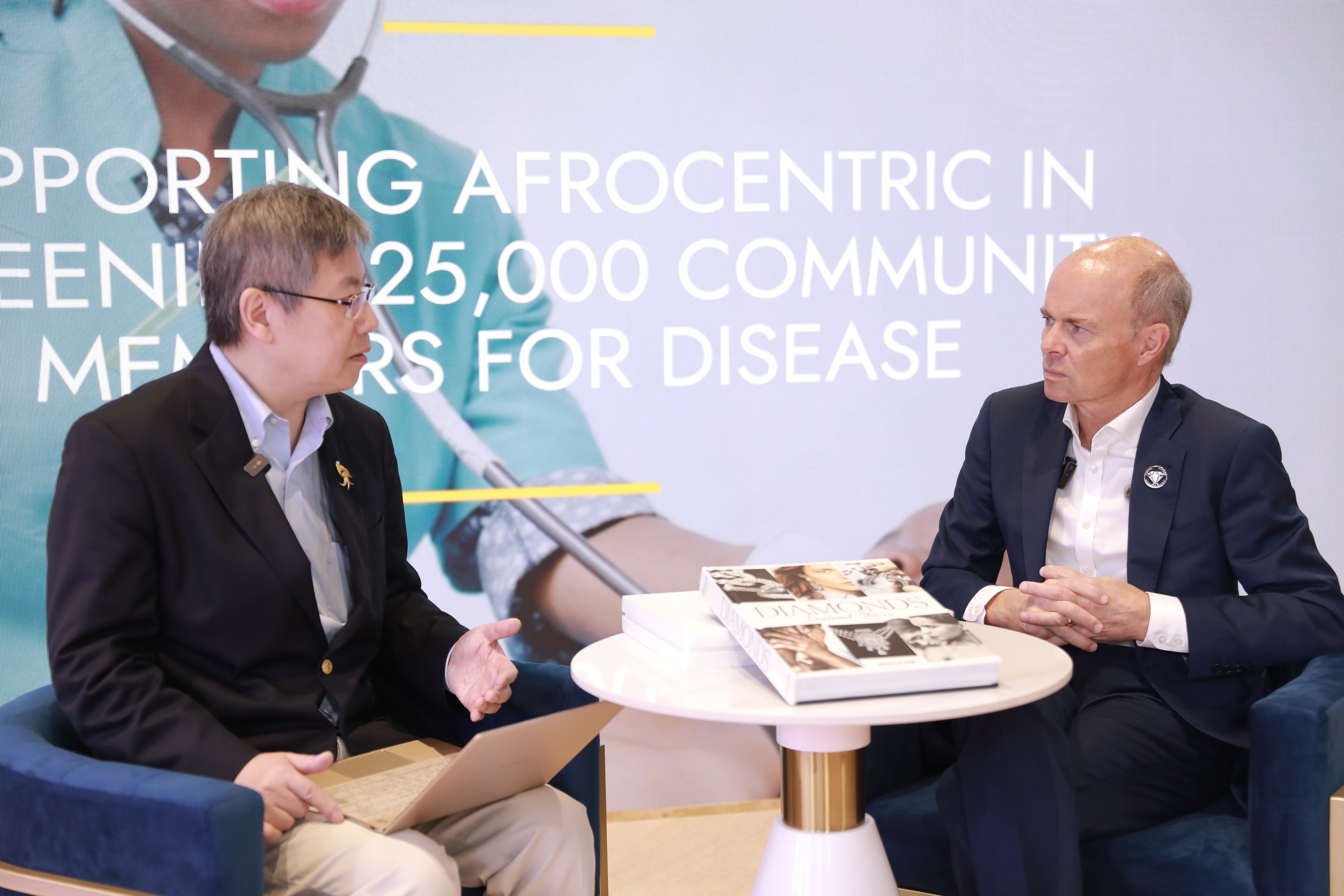

“There are times when global markets behave similarly, but this isn’t one of those times. Currently, each market is acting differently.” – David Kellie, Global CEO of Natural Diamond Council (NDC)
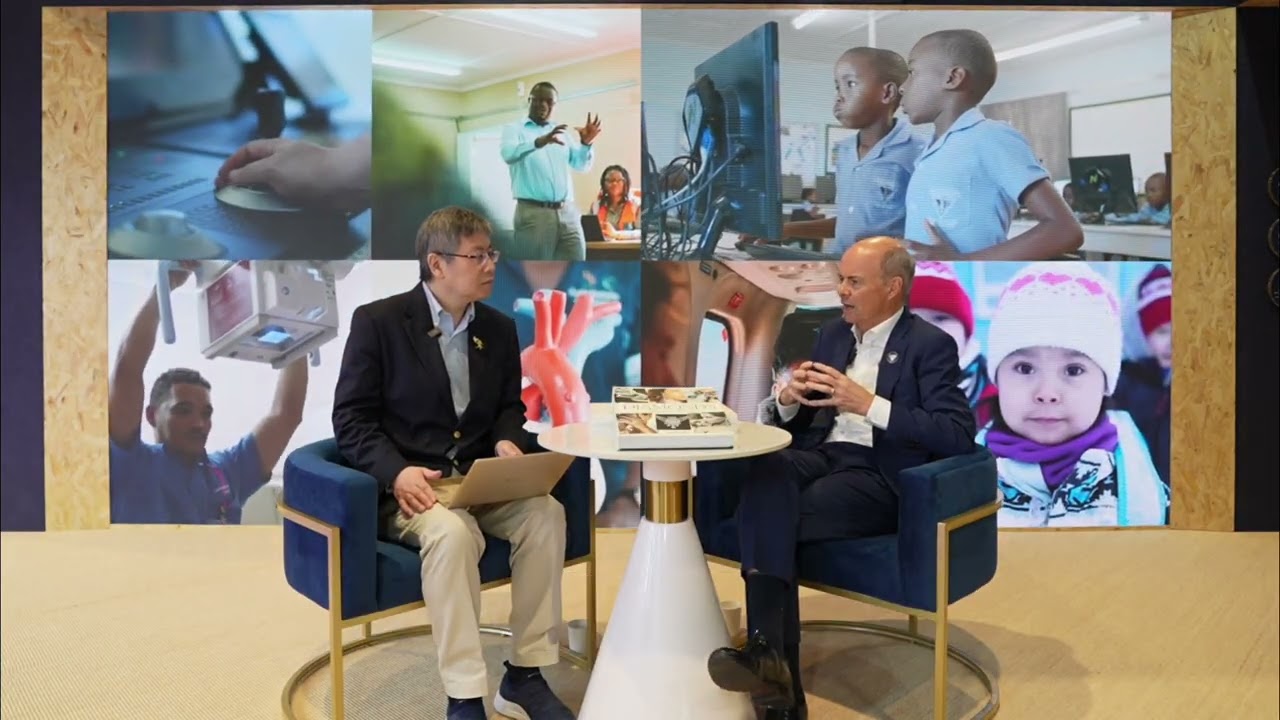

Natural Diamond Council is a not-for-profit organization committed to inspiring and educating consumers on the values of natural diamonds and the positive global impact of the industry. In this exclusive interview, Mr. David Kellie, Global CEO of the NDC reveals the initiatives of the NDC and his view on market situation and lab-grown diamonds.

All Pictures in this article courtesy of the NDC.
What is the general market situation for diamond in late 2023 and 2024, especially in USA, China, India and Europe? Are there any major changes and new phenomenon in the market? What are the reasons behind them?
There are times when global markets behave similarly, but this isn’t one of those times. Currently, each market is acting differently. Starting with the largest market, the U.S., where over 50% of diamonds are sold, even this market is divided. There are two distinct audiences: at the high end, wealthy consumers are purchasing from their wealth. These affluent individuals have prospered in the current economy, with stock markets at record highs in the U.S.. This audience continues to buy significant amounts of diamond jewelry, which is evident in the success of high-end independent jewelers.
In the middle tier, consumers purchase using their income and disposable income, but they’ve been more affected by inflation and rising living costs, making it a tougher time for them. There are more middle-tier retailers than high-end ones, and they’ve also experienced a slowdown in engagement ring sales following the COVID-19 pandemic, though an uptick is beginning. Thus, the U.S. market can be distinctly divided into two defined segments.

Moving east from the U.S. to the next largest market, India, we see that the Indian market is currently thriving. The economy and stock market are both performing well, making it one of the fastest-growing markets globally. In contrast, China’s slowdown in economic growth rate is likely impacting the diamond industry more than any other market.
This trend has been ongoing for about a year and a half to two years. There was a high expectation that post-pandemic, the Chinese market would boom similarly to the U.S. and India. Unfortunately, that hasn’t materialized. The Chinese market remains steady but isn’t performing at the same pace as the other markets.


What is the main contributing factors which make India the second largest market right now, instead of China?
The economy in India is currently thriving, with significant inbound investment across various industries. The stock market is also performing exceptionally well. India, long seen as having substantial economic potential, is now beginning to realize that potential, particularly in the diamond industry. Confidence in the economy is growing, bolstered by a rising middle class and a large, diverse population. The economic growth and confidence in the diamond jewelry sector are becoming evident, though such development takes decades. About 15 years ago, the BRIC term was coined for Brazil, Russia, India, and China, with only China booming as expected. Now, it seems India is poised to be the next of these economies to truly boom.
How is NDC working with diamond manufacturers, wholesalers and retailers to adapt to the market situations? What initiatives have NDC taken to make sure that the focus of the business of these businesses and consumers remains on natural diamonds?
Our mission is to inspire consumers with the values and beauty of natural diamonds. We achieve this directly through social media and by collaborating with industry partners. Our approach varies based on their position in the value chain. For instance, retailers engage directly with consumers, so we share and promote our campaigns with them and help educate sales teams, who are crucial in inspiring consumers. Retailers and the press play a vital role in our consumer relationships.
We also work with wholesalers, diamond manufacturers, and member companies of the National Diamond Council to promote diamond values throughout the value chain. We provide industry reports on performance and social impact, and these partners invest in us to support our mission. Over 90% of natural diamonds are still purchased in brick-and-motor stores, highlighting the importance of trusted retailers and knowledgeable sales teams.

The retail market is fragmented, with many independent and smaller stores worldwide. We collaborate with industry partners to achieve our goals, providing educational materials and working with organizations like the GIA. The key is uniting as an industry, not acting individually. We aim to make 2025 the year of education for sales advisers, starting with a meeting in New York. It’s crucial for us to come together, using our resources and connections, to pursue a common goal in this market.

After 2020, many retailers experimented selling natural diamonds and lab-grown diamonds in the same store, or in separate sales channels. As the price of lab-grown diamond price continue to plunge, have they changed their business strategy and gravitated on natural diamonds again?
Yes, as the saying goes, goods follow the money. In 2019 and 2020, profit margins on lab-grown diamonds were very high for retailers, both in percentage and dollar terms. This incentivized retailers to sell lab-grown diamonds and offer incentives to sales teams, despite knowing this was a short-term strategy due to the inevitable price crash. U.S. retailers pursued this short-term profitability, unlike their more cautious Asian counterparts who focused on long-term prospects.
Now, the dollar margin on lab-grown diamonds is less than on natural diamonds, altering the retailer business model. Store traffic generally remains unchanged, so they can’t compensate for lost margins by increasing traffic and lowering prices. Lab-grown diamond prices have crashed by 90-95% from their original levels, and while U.S. retailers still maintain higher prices, normal margins are rare.
Many U.S. retailers are now reconsidering their business models, potentially still selling lab-grown diamonds but shifting back to a higher ratio of natural diamonds. This requires incentivizing and educating staff to sell natural diamonds again. This structural shift in the market is expected to happen quickly, as changes in the financial model lead to changes in behavior, especially in the U.S., the largest market for lab-grown diamonds.
How will the natural diamond and lab-grown diamond business diverge in the next few year? Is natural diamond going back to the prevailing position in the wedding market, and lab-grown diamonds going to take over the fashionable jewelry market? Do you think this trend of selling lab-grown diamond retail comes quickly and might go quickly?
It’s just a matter of a few years, as trends fluctuate. The reversal might happen as quickly as lab-grown diamonds penetrated the U.S. market, given the change in the financial model. Lab-grown diamonds will likely continue to be sold by lower-priced jewelry brands, where they enhance the brand. However, in the traditional diamond jewelry trade, the financial model is unsustainable. Retailers will either need to close their business or shift to re-balance their mix towards natural diamonds.
Small to medium jewellers are very vulnerable now because they have limited access to financing and strategic resources. How will NDC help them to survive and develop?
I see it a bit differently. Smaller retailers seem more agile, able to implement changes quickly, while larger retail groups, with their complex structures, take longer to adapt. The NDC can assist by offering digital platforms, advertising campaigns, social media assets, and educational modules for sales teams, providing essential facts and information about natural diamonds and their positive impact. The NDC supports them with resources they can’t create themselves, which are crucial for the retail and industry platforms, as these assets are generally unavailable elsewhere in the industry.
How does NDC develop its marketing strategy to adapt to the new generation of consumers, in terms of their value of sustainability, their value of life, and their perspectives on emotional values? In late 2023 and 2024, what initiatives has the NDC implemented to reach out to more audience, especially in China, and in Asia?
At the NDC, we’ve consistently focused on younger generations entering the jewelry market, as they are keen to understand what they’re buying, including its provenance and impact. Our focus was on millennials, and now more on Gen-Z, emphasizing digital engagement. These generations consume inspiration and seek knowledge through digital platforms, so our strategy is to be present across these fragmented spaces. We aim to appear wherever they look for information or inspiration about luxury purchases, providing content, narratives, facts, and education.

What is NDC’s outlook on the business in the major markets for natural diamonds for the rest of 2024 and 2025, especially the US, China, India and European markets?
If the last 5 years have taught us anything, it’s that predicting the future is extremely challenging! In the US, the election outcome created certainty that was well received by financial markets. However, with future trade policies being less certain, the impact on the broader economy in the US and beyond is yet to be seen. But confidence in the US is good, and predictions for engagements and marriages are positive. Provided inflation can be kept under control without the need for higher interest rates, the diamond jewelry market in the mid-tier should continue to recover and, at the high end, sustain its strong position. The EU will follow a largely similar trajectory.
We believe that India will continue its strong economic momentum which, in turn, will bring prosperity to more people, benefiting the diamond jewelry category. For mainland China and Hong Kong, recent indications are that the market has reached its toughest position and we’re starting to see the green shoots of recovery. But this recovery is fragile, and we hope that the wider economic conditions support a quicker recovery.
If lab-grown diamonds takes over the market of fashionable jewelry, which have been typically using lower color and lower clarity small natural diamonds, will the mining company be forced to raise price on bigger natural diamonds to make up the loss in the sales of small ones? How will NDC adjust its strategies?
It’s not really about the size of the diamonds, as the price difference between lab-grown and natural diamonds is more pronounced in larger stones. In smaller diamonds, where the price gap is narrower, consumers are more likely to choose natural diamonds since the additional cost isn’t much higher, yet the value difference is significant. Thus, smaller diamonds are more likely to be natural. The issue is more about retailer classification; lower-priced jewelry retailers are more likely to feature lab-grown diamonds, rather than it being about the diamond size itself.
What are the major plans for NDC in 2025?
There are three main pillars. First, we strive to inspire consumers through promotion, advertising, and marketing by telling the story of natural diamonds, with ongoing investment in digital marketing. Second, education is essential for both consumers and in-store sales advice, making it a critical pillar. Third, we aim to onboard more partners to amplify our message, ensuring it’s not solely the Natural Diamond Council driving this effort. We work with partners like grading labs and the Shanghai Diamond Exchange to share a unified voice and values, promoting this wonderful industry.

Gold jewelry, especially Hard Pure Gold (硬足金) has gain popularity in China due to its hardness, lightness and intricacy in design. The young consumers wants to spend smartly on jewelry to represent themselves and meanwhile retain value. The market share of gold jewelry is taking up more market share in China. Is it an opportunity for NDC as well, if Hard Pure Gold is used as a setting material for diamonds?
The gold market in China and India operates differently from Western markets. In China, gold is seen as both a store of value and an investment, with people closely monitoring gold prices as it symbolizes wealth storage and adornment. In contrast, diamonds are valued for their beauty and are treasured for a lifetime, often passed down through generations. They are primarily beautiful and valuable gems that retain their value over time. Despite short-term price changes, natural diamonds have appreciated over the past 30 years. In China, there’s a greater awareness of financial value, unlike in the U.S., where people are less focused on gold and diamond prices. It’s intriguing to see retailers innovate by combining diamonds with gold jewelry to enhance value and appeal. I’m inspired by how Chinese jewelers adapt to market changes and consumer dynamics.
People have loved diamonds for thousands of years. And in spite of all the crisis, wars, depressions, the diamond jewelry industry always manage to recovers. What can we do in our own and current market situations?
It’s partly due to economic factors, which we can’t fully control. However, our main focus is on inspiring consumers. We aim to ensure they understand the value of natural diamonds, recognize their positive impact, and see them as culturally relevant.
By doing so, we make them appealing and desirable, ensuring they can be loved. However, this doesn’t necessarily mean that a consumer with $1,000 will choose to spend it on diamond jewelry. Our focus is on inspiring consumers—through the product itself, the promotions we run, and the messaging we convey. As an industry, it’s crucial for us to keep investing in and inspiring consumers with this incredible gem.
In the Dubai Diamond Conference on November 11, 2024, a new funding project was under discussion to establish an industrywide fund to support category marketing for natural diamonds by NDC. Could you please provide more detail? How will this new program fundamentally change the funding structure of NDC? Why it is more important for diamond trading and manufacturing centers to get involved, rather than just diamond mining companies?
Consumer demand is critical for the success of the diamond industry, and this can only be created through meaningful investment in global marketing and promotion. The current challenges within the industry have brought this challenge sharply in to focus. The leaders of the key diamond centers of Dubai, Antwerp, India, and Shanghai, together with the World Federation of Diamond Bourses, have come together to discuss the meaningful funding of generic diamond category marketing.
This, along with partnerships with diamond producing countries and major retailers, will be an extremely positive step forward and the NDC will change its structure to give all who participate in its mission a voice in our strategies and plans.


This article was published and printed on Gem Spectrum print magazine Issue #2 Winter 2025, page 32. Please browse the Flipbook below.