by the Gem and Jewelry Institute of Thailand (GIT)
Color is one of the most critical factors in gemstone evaluation, directly influencing quality assessment, market value, and consumer confidence. However, gemstone color perception is highly dependent on lighting conditions. Differences between natural daylight, laboratory lighting, and commercial indoor illumination often lead to inconsistencies in color grading and disputes between laboratories, traders, and consumers.

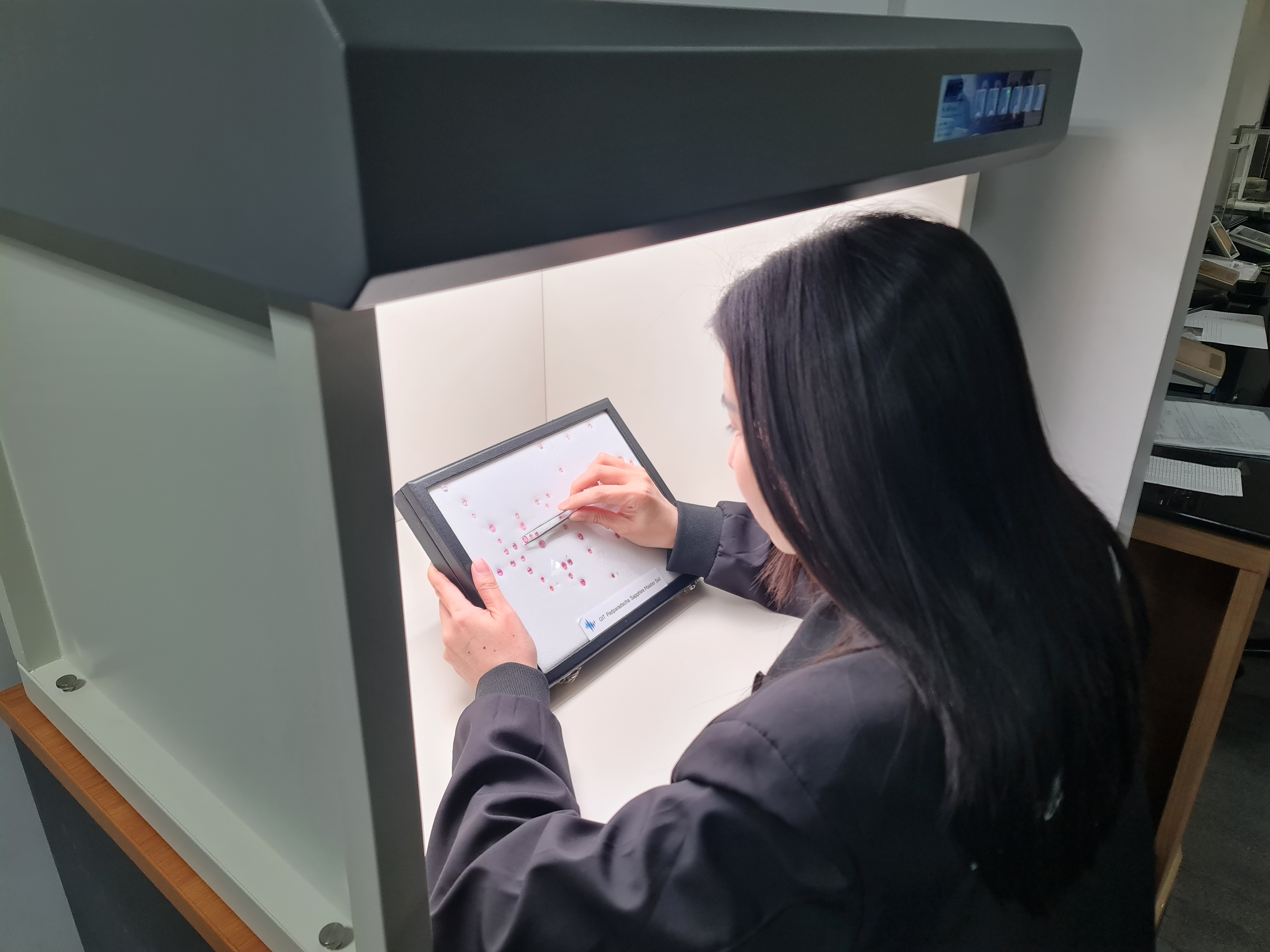
To address this long-standing challenge, the Gem and Jewelry Institute of Thailand (GIT) has conducted extensive research and development to create the Gems Color Grading Cabinet, a standardized color grading system based on advanced LED lighting technology. The objective is to provide a reliable reference tool that delivers lighting conditions closely matching natural daylight under optimal viewing periods for gemstone color evaluation.

Understanding the Role of Natural Daylight in Gemstone Grading
Through comprehensive literature reviews and in-depth interviews with gemstone traders, GIT identified that gemstone color grading is most accurate when performed under natural daylight. In particular, the period between 10:00 a.m. and 2:00 p.m. was consistently cited as the optimal time window for color assessment. During this timeframe, daylight is relatively stable, evenly distributed, and free from extreme color temperature shifts.

GIT conducted detailed measurements of daylight during these hours and found that the average correlated color temperature (CCT) is approximately 5,700 Kelvin, with a broad and elevated spectral distribution across the visible range. These characteristics allow gemstones to display their true colors with minimal distortion, making this lighting condition ideal for grading purposes.
Limitations of Conventional Laboratory Lighting

Despite the recognized advantages of natural daylight, most gemological laboratories traditionally rely on fluorescent lighting systems within color grading cabinets. While convenient and widely available, fluorescent lamps exhibit spectral discontinuities and color rendering characteristics that differ significantly from natural sunlight.
As a result, gemstones graded under fluorescent lighting in laboratories may appear different when observed under natural daylight conditions commonly used in gemstone markets. This discrepancy has long been a source of inconsistency between laboratory grading reports and real-world trading practices. Additionally, indoor trading environments illuminated by fluorescent lamps can further distort color perception, contributing to disagreements between sellers and buyers and undermining trust in the grading process.
LED Technology as a Solution
Recognizing these challenges, GIT partnered with W.I.P. Electric, a company specializing in electrical systems and LED manufacturing, to develop a new generation of gemstone color grading equipment. The research team translated the measured characteristics of optimal natural daylight into a precisely engineered LED-based lighting system.
The resulting LED light source was carefully calibrated to replicate the spectral and chromatic properties of natural daylight as closely as possible. The system achieves a Color Rendering Index (CRI) greater than 98, indicating exceptional accuracy in reproducing object colors. This high CRI ensures that gemstone colors observed within the cabinet closely match their appearance under natural sunlight.
The development process led to the successful creation of a prototype Gems Color Grading Cabinet, designed to provide consistent, stable, and reproducible lighting conditions suitable for professional gemological evaluation.
Product Expansion and Industry Adoption
Following the successful prototype phase, GIT further developed the Gems Color Grading Cabinet into multiple sizes and configurations to meet the diverse needs of the gemstone industry. The product has received strong interest and positive feedback from a wide range of users, including:
- Gemstone traders and dealers
- Gemological laboratories
- Educational and training centers
- Universities and research institutions
Both domestic and international organizations have adopted the system, recognizing its ability to bridge the gap between laboratory grading and market-based color perception.
Supporting Business Continuity in All Conditions
To further extend the practical applications of the research, GIT also developed LED color grading lamps designed for use in retail shops and trading offices. These lamps allow gemstone professionals to perform accurate color evaluation indoors, independent of weather conditions or time of day.

This innovation enables continuous business operations, even on cloudy or rainy days when natural daylight is unavailable or unsuitable for gemstone color assessment. By recreating daylight-equivalent conditions indoors, traders can maintain consistent grading standards throughout the year.
Addressing the Digital Transformation of Gemstone Trading
In recent years, the gemstone and jewelry industry has increasingly adopted online sales and live-streaming platforms. Live sales events allow traders to reach global audiences, but they also introduce new challenges—particularly in accurately representing gemstone color through digital screens.
To address this emerging need, GIT expanded its research into the development of a photography and live-streaming cabinet specifically designed for gemstones. The cabinet integrates the same LED lighting technology used in the Gems Color Grading Cabinet, creating a controlled environment that closely simulates natural daylight.

This system ensures that gemstone colors captured on camera are accurate and consistent, allowing consumers to see colors that closely match the actual product they receive. As a result, the solution enhances consumer trust, strengthens seller credibility, and significantly reduces disputes and product returns related to color discrepancies.
Strengthening Standards Across the Gemstone Value Chain
The development of the LED-based Gems Color Grading Cabinet represents GIT’s commitment to advancing scientific standards, transparency, and trust within the gemstone and jewelry industry. By providing a lighting solution that aligns laboratory practices with real-world trading conditions, GIT has helped establish a common reference point for color evaluation from upstream production to downstream retail and digital commerce.
More than a lighting device, the Gems Color Grading Cabinet serves as a standardization tool, supporting accurate grading, fair trade, and sustainable industry growth in an increasingly global and digital marketplace.
Special thanks to Dr. Bhuwadol Wanthanachaisaeng, Chief of Research and Standard Development Department of GIT.
Articles related to GIT:
https://gem-spectrum.com/tag/git
This article was published on Gem Spectrum print magazine issue #6 (Winter 2025-26), Page 24. Browse the Flipbook here. Full-screen viewing and download are possible.