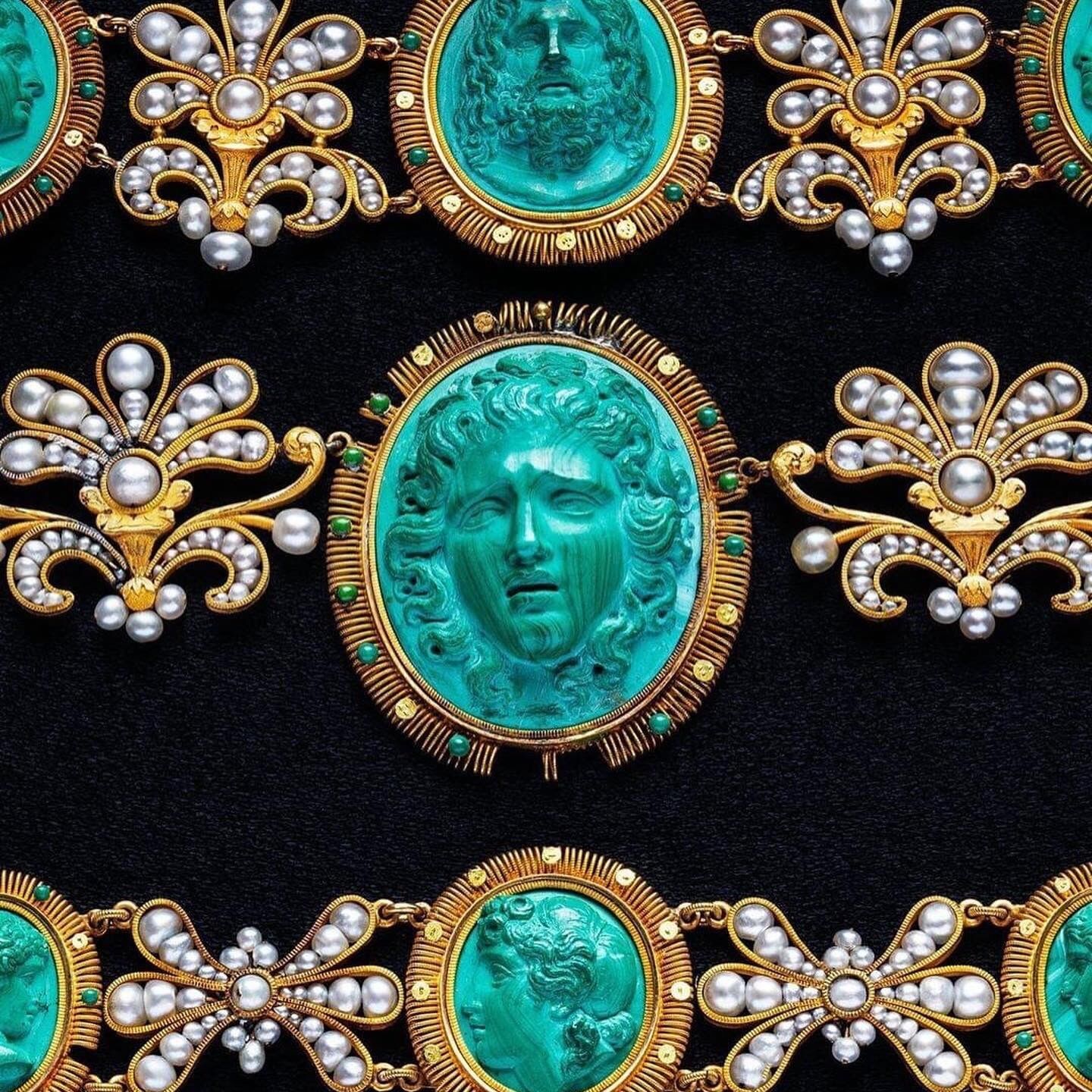

Malachite is a green hydrated copper carbonate that usually occurs in aggregates, often banded, sometimes with botryoidal or stalactitic habit that occurs in copper-bearing geological formations, sometimes associated with azurite (a blue copper carbonate).
Its name comes from the Greek alluding to the colour of mallows or malve leaves. Malachite was widely used in Eastern European decorative arts (e.g. furniture, objets d’art, vases, interior decoration) notably using material from the historical Ural Mountain deposits that were productive since the late-1700s and also in Chinese carved vases from the Qianlong period of the Qing dynasty. Other world sources of malachite include Katanga in DR Congo (a very important occurrence), USA, Zambia, Chile and Namibia.


As a carbonate with low hardness (bellow 4 in the Mohs scale) and high chemical susceptibility, namely to acids, special care is required in handling and maintaining malachite. Surface waxing is an occasional treatment and it is rarely impregnated with resins or polymers. Fashioning malachite is known to be very hazardous requiring special protection for safety.

Guest articles by Rui Galopim de Carvalho:
https://gem-spectrum.com/category/rui-galopim-de-carvalho


About the author:
Rui Galopim de Carvalho is a renowned independent Gem Education Consultant, author, luxury industry training expert and popular international lecturer on gemmology and on the history of gem materials. During his 30 year experience as a gemmologist, Rui has studied important collections in both public and private museums, notably the Portuguese Crown Jewels.

Founder of the popular Home Gemmology webinar series launched during the COVID-19 lockdown, Rui has a long history as a gemmology communicator, notably on social media where he is a popular figure.
He is associate editor of Gem-A’s Journal of Gemmology, Vice-President of the Coral Commission of The World Jewellery Confederation – CIBJO, member of the Communications Committee of ICA (International Colored Gemstone Association), ambassador for LAUREL -Portuguese Association of Excellence Brands (ECCIA member) and consultant for several private collections and trade organizations.
Rui Galopim de Carvalho can be reached through his website: