Often called the “Evening Gemstone,” kunzite is a lithium-rich, heat-sensitive, highly pleochroic pink variety of spodumene, a pyroxene species first described by Portuguese-Brazilian mineralogist José Bonifácio de Andrada e Silva (1763-1838).
The name kunzite is a homage to George Frederick Kunz (1856-1932), the illustrious American passionate mineralogist and gemmologist that worked a lifetime for Tiffany & Co. since 1877 (depicted above) and that described this pink variety of spodumene in 1902 at the famous Pala pegmatite in California, USA.

Kunzite also occurs in other pegmatites, namely in Brazil, Mozambique, Madagascar, and Afghanistan, sometimes as beautiful collectors’ mineral specimens that come, by the way, quite handy to demonstrate pleochroism to students.
Its nickname “evening gemstone” derives from its known tendency to fade on exposure to sunlight, which recommends extra care in the window display and use of this gem, preferably at night, some say.
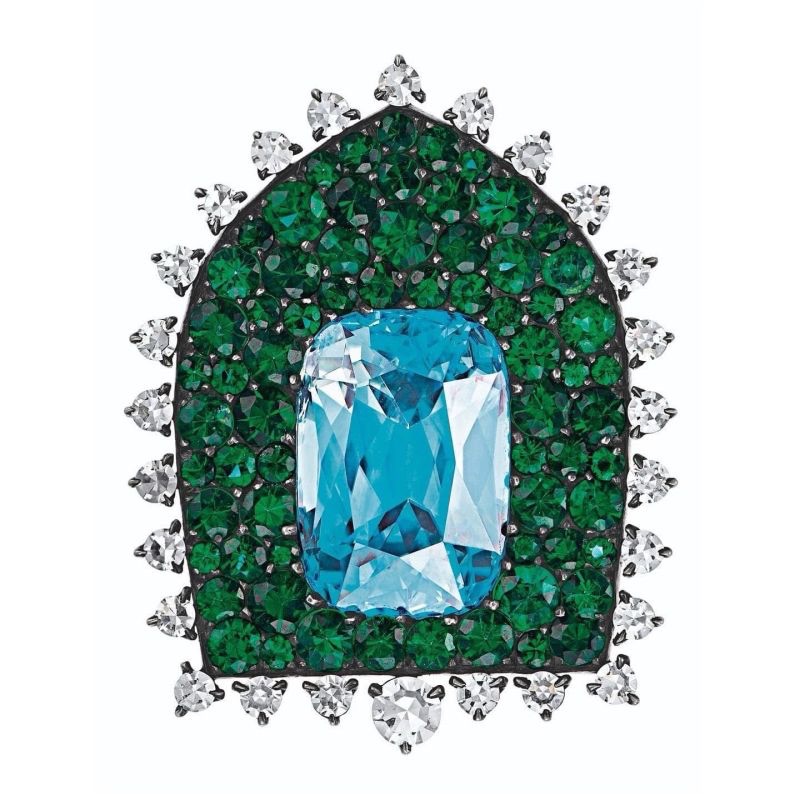
In the photos, a kunzite crystal from the original find by George F. Kunz at Pala Chief mine in California, USA © Museum national d’Histoire naturelle, Paris; Jean Schlumberger’s iconic “Bird on a Rock” brooch featuring an oval-shaped kunzite © Tiffany & Co.

Guest articles by Rui Galopim de Carvalho:
https://gem-spectrum.com/category/rui-galopim-de-carvalho


About the author:
Rui Galopim de Carvalho is a renowned independent Gem Education Consultant, author, luxury industry training expert and popular international lecturer on gemmology and on the history of gem materials. During his 30 year experience as a gemmologist, Rui has studied important collections in both public and private museums, notably the Portuguese Crown Jewels.
Founder of the popular Home Gemmology webinar series launched during the COVID-19 lockdown, Rui has a long history as a gemmology communicator, notably on social media where he is a popular figure.
Rui Galopim de Carvalho can be reached through his website: