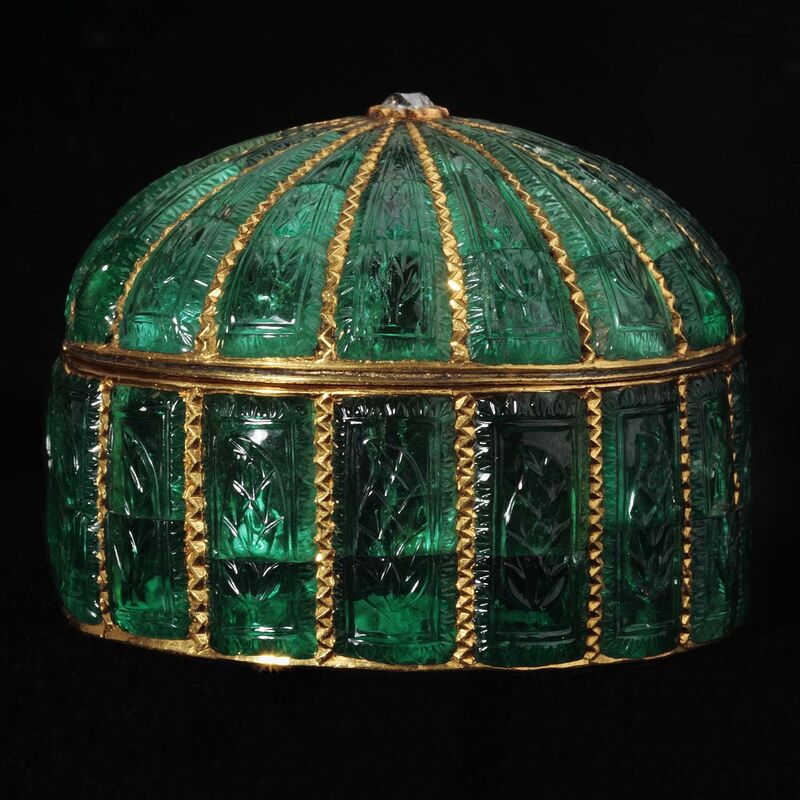

Gem-quality emeralds are known to typically display internal characteristics, such as those known in gemmology as fluid inclusions and fissures, sometimes in such a quantity that it may compromise the stone’s “crystalline” transparency. In such a case, instead of faceting (the more obvious choice for fashioning transparent gemstones), the typical fashioning decision goes for polishing beads, cabochons, engravings, or carvings.
Colombian emeralds, such as those produced in the 16th and 17th centuries, were often carved with artistic or devotional motifs, in both low- and high-clarity rough material. It is a typical case of adding value through craftsmanship.

This ca. 1635 green box (4 x 5 cm), made in Mughal India using gold sheet, set with a faceted diamond in gold kundan, with an enamelled base, and set with 103 matched Colombian emeralds carved in shallow relief to depict cypress trees within borders of repeated stylized leaves, is a fine example of this fashioning solution.
At the highest levels of the Mughal courts, a considerable number of carved emeralds were commissioned and this is believed to be one of those cases.
Photos © The Khalili Collections
Guest articles by Rui Galopim de Carvalho:
https://gem-spectrum.com/category/rui-galopim-de-carvalho

About the author:
Rui Galopim de Carvalho is a renowned independent Gem Education Consultant, author, luxury industry training expert and popular international lecturer on gemmology and on the history of gem materials. During his 30 year experience as a gemmologist, Rui has studied important collections in both public and private museums, notably the Portuguese Crown Jewels.
Founder of the popular Home Gemmology webinar series launched during the COVID-19 lockdown, Rui has a long history as a gemmology communicator, notably on social media where he is a popular figure.
Rui Galopim de Carvalho can be reached through his website: