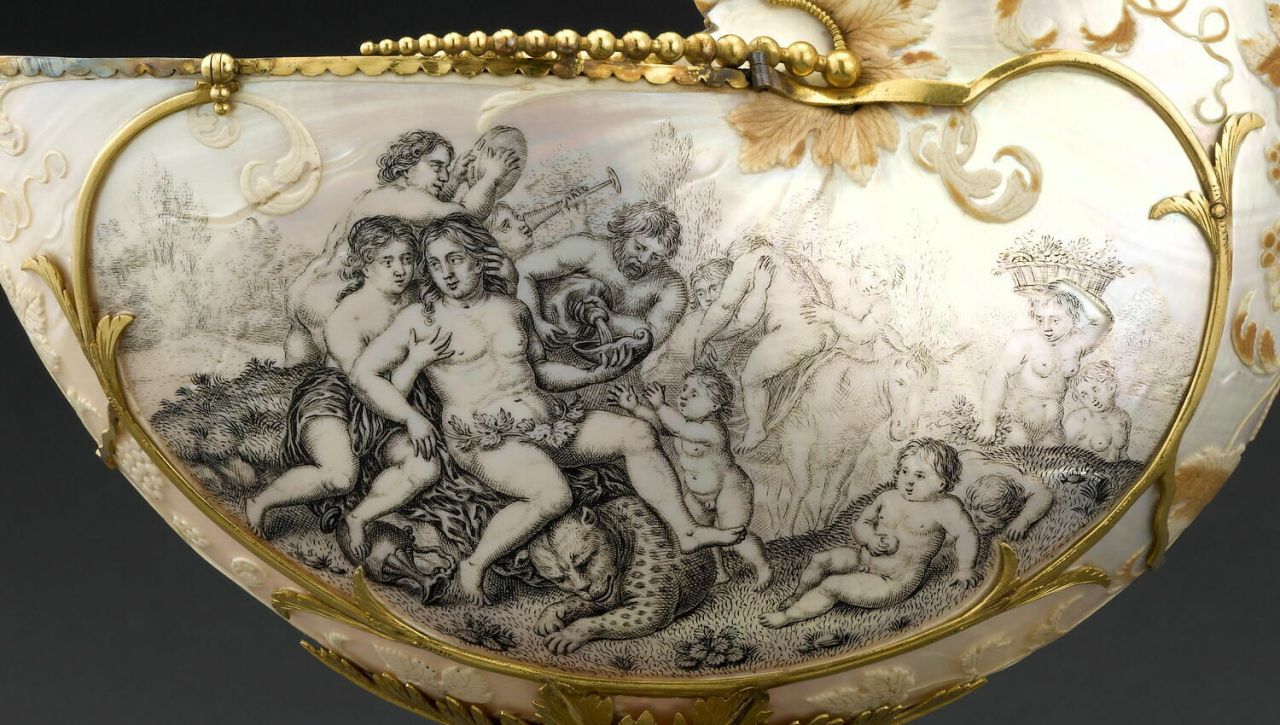

The chambered nautilus is the only marine cephalopod species that offers a hard shell as precious material for the decorative arts. Other molluscs, like bivalves (e.g. pearl oysters) or gastropods (e.g. conch shell, abalone), are way more familiar to gemmologists.

The species, Nautilus pompilius, lives in the Indo-Pacific region and has a characteristic spiral shell with chambers, hence the name.
The use of this nacreous shell was quite popular in the 16th and 17th centuries, being fashioned by skilled engravers.

Nacreous pieces of nautilus shell have also been used as a pearl imitation, known in the trade as coque de perle, Nautilus pearl or Osmeña pearl (coque de perle is an old French trade expression that refers to the imitation pearl made from nacreous polished shell sections of the chambered nautilus that are typically assembled as a composite pearl simulant).
Curiously, the existence of true natural pearls from a Nautilus shell is not well documented from this species that has been listed in Appendix II of CITES since 2017.

Gilded copper, wood and engraved Nautilus shell cup, signed C. Bulletin (Cornelis van Bellekin, sculptor from Amsterdam, circa 1625-1711). © Musée du Louvre, Dist. GrandPalaisRmn / Martine Beck-Coppola
Guest articles by Rui Galopim de Carvalho:
https://gem-spectrum.com/category/rui-galopim-de-carvalho

About the author:
Rui Galopim de Carvalho is a renowned independent Gem Education Consultant, author, luxury industry training expert and popular international lecturer on gemmology and on the history of gem materials. During his 30 year experience as a gemmologist, Rui has studied important collections in both public and private museums, notably the Portuguese Crown Jewels.
Founder of the popular Home Gemmology webinar series launched during the COVID-19 lockdown, Rui has a long history as a gemmology communicator, notably on social media where he is a popular figure.
Rui Galopim de Carvalho can be reached through his website: