
The way mineral crystals form in their natural geological environment is a fascinating subject, namely in understanding the so-called “twins”.
Twins are symmetrical intergrowths of two or more crystals of the same species that grew in different crystallographically controlled directions according to certain rules (the so-called twin laws). The twinned crystal portions are all in structural continuity, and the bonding at their junction conforms to the crystal lattice directions on both sides of the direction change (meaning, the junction is a special direction).

There are four types of twins: contact twins (sometimes known as macles), penetration twins, polysynthetic twins, and cyclic twins.
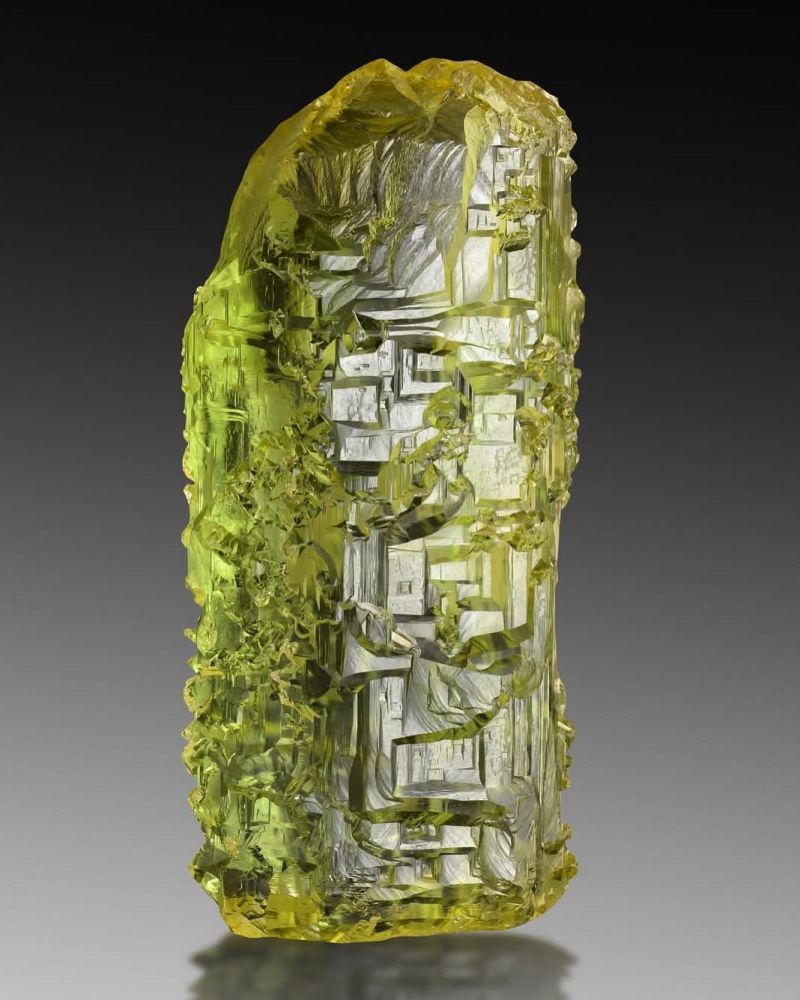
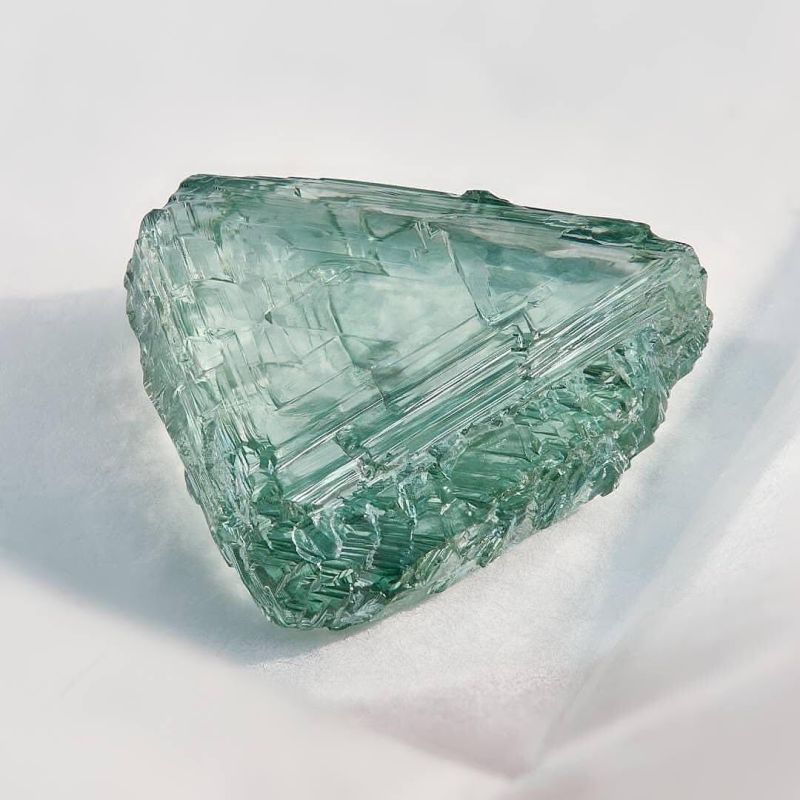
Mineral collectors and lovers are quite fond of such well-developed specimens like this 18.79 ct rare contact twin diamond specimen.
This bluish-green twinned crystal shows a typical triangular shape and surface growth structures (in this case, there are no dissolution marks known as trigons). These twinned shapes are more commonly referred to in the diamond industry as a “macles”.

Due to its size and beauty (at least in the eyes of a gemmology and mineralogy enthusiast), De Beers decided to set it in the rough, that is, without any cutting or polishing operations, in a signature necklace dubbed “Awakening Lotus”.
The fact that it was not fashioned also contributed to the preservation of this colour.
Photos © De Beers Group
Guest articles by Rui Galopim de Carvalho:
https://gem-spectrum.com/category/rui-galopim-de-carvalho

About the author:
Rui Galopim de Carvalho is a renowned independent Gem Education Consultant, author, luxury industry training expert and popular international lecturer on gemmology and on the history of gem materials. During his 30 year experience as a gemmologist, Rui has studied important collections in both public and private museums, notably the Portuguese Crown Jewels.
Founder of the popular Home Gemmology webinar series launched during the COVID-19 lockdown, Rui has a long history as a gemmology communicator, notably on social media where he is a popular figure.
Rui Galopim de Carvalho can be reached through his website: